Inside the 2026 AI Wars: How GPT-5.4 and Claude 4.6 Redefined Work
Inside the 2026 AI Wars: How GPT-5.4 and Claude 4.6 Redefined Work
Imagine waking up on a Tuesday morning in April 2026. You don't start your day by checking 50 unread emails or staring at a blank spreadsheet. Instead, you check your "Agent Dashboard."
While you were sleeping, your AI agent—let’s call it your Digital Twin—already replied to three scheduling requests, filed your expense reports, and wrote a first draft of the Python script you needed for the morning meeting. It didn't just "suggest" these things; it actually opened the apps, moved the mouse (virtually), and clicked the buttons for you. 🚀
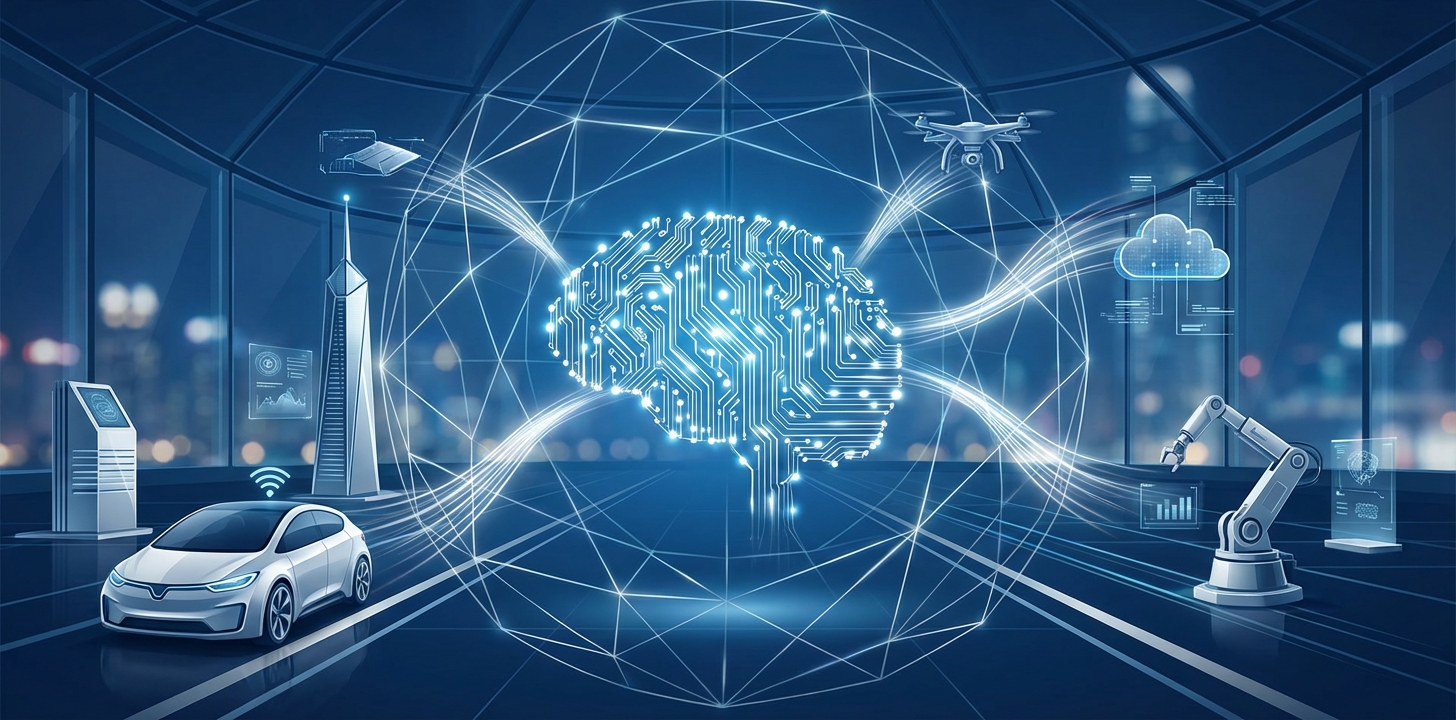
This isn't a scene from a sci-fi movie. This is the reality of the "Agentic Era" that has officially arrived as of April 2026. We’ve moved past the days of just "chatting" with a bot. We are now living in a world where AI has hands. 🦾
Why This Matters
For the last few years, we treated AI like a very smart encyclopedia. You asked it a question, and it gave you an answer. If you wanted to get work done, you still had to copy-paste that answer into a document or an email.
In 2026, that "middleman" work is disappearing. The latest models from OpenAI, Anthropic, and Google are no longer just Large Language Models (LLMs); they are Large Action Models (LAMs). They understand the "intent" behind your work and can execute multi-step tasks across different software platforms without you lifting a finger. [2]
This matters because it shifts the human role from "doer" to "director." If you aren't learning how to manage these agents now, you’re essentially trying to build a skyscraper with a hand-saw while everyone else is using a 3D printer. The productivity gap between those who use 2026-era AI and those who don't is becoming a canyon. 🏔️
The Big Story
The headline news this month is the "Spring 2026 AI Model Rankings," and the competition is tighter than a Formula 1 race. OpenAI’s GPT-5.4, Anthropic’s Claude 4.6, and Google’s Gemini 3.1 Pro are battling for dominance, and the benchmarks are staggering. [1]
OpenAI recently released GPT-5.4, which focuses heavily on "reasoning." Unlike the older GPT-4, which sometimes "hallucinated" (made things up), GPT-5.4 uses a new architecture that "thinks before it speaks." It runs internal simulations of its answers to check for errors before it ever shows them to you. [1]
Meanwhile, Anthropic’s Claude 4.6 has become the king of "Computer Use." Through its advanced API, Claude can literally "see" your computer screen, navigate UI elements, move the cursor, and type. It treats your operating system like a playground. Imagine telling an AI, "Find the sales data from last month, put it into a chart, and Slack it to the team," and then watching your mouse move on its own to finish the task. [2]
Google isn't sitting still either. Gemini 3.1 Pro has integrated so deeply into the Android ecosystem that it has become the gold standard for mobile developers. In recent benchmarks, Gemini 3.1 Pro tied with GPT-5.4 for the "Best AI for Android Development," scoring a massive 72.4% on complex coding tasks. [5]
| Feature | GPT-5.4 | Claude 4.6 | Gemini 3.1 Pro |
|---|---|---|---|
| Primary Strength | Complex Reasoning & Logic | Autonomous "Computer Use" | Mobile & Ecosystem Integration |
| Coding Score | 72.4% (Android Focus) | 68.5% | 72.4% |
| Best For | Strategy & Research | Executing Workflows | App Dev & Personal Assistant |
| Vibe | The "Brainy" Professor | The "Do-it-all" Assistant | The "Always-Ready" Companion |
| "The goal isn't just to have a model that talks," says one industry researcher. "The goal is a model that acts with intent and reliability." [10] | |||
| US Watch | |||
| In the United States, the focus has shifted from "Can we build it?" to "How do we control it?" The US government is closely watching the "Agentic" capabilities of these models. There is a growing debate in Washington about the "Computer Use" API. 🇺🇸 | |||
| If an AI can move your mouse and access your bank account (with your permission), how do we ensure it isn't hijacked by bad actors? US regulators are currently working with OpenAI and Anthropic to create "Agentic Safety Rails." These are digital fences that prevent AI from performing irreversible actions—like deleting a database or sending a wire transfer—without a physical "human-in-the-loop" confirmation. | |||
| Wait, what? Yes, we are literally at the point where we need laws to prevent AI from accidentally spending our money or firing our employees. Microsoft has also been a major player here, integrating these agentic features directly into Windows 12 (the AI-first OS), making the entire computer experience feel like a conversation rather than a series of clicks. | |||
| China Watch | |||
| Across the Pacific, China is taking a different but equally powerful approach. While the US is winning on "General Intelligence," China is making massive strides in "Inference Efficiency." 🇨🇳 | |||
| Models like DeepSeek R1 (and its 2026 successors) have pioneered "Reinforcement Learning via Verifiable Rewards" (RLVR). In plain English: they've figured out how to make AI models that are 10x cheaper to run but just as smart as the American giants. [9] | |||
| China is also heavily focused on the hardware side. Because of various chip restrictions, Chinese researchers are forced to be more creative. They are rethinking hardware architectures to sustain LLM growth with extreme energy efficiency. [12] This means we might see the first "Oversmart" phones—devices that run massive AI models locally without needing a giant server farm in the desert. | |||
| Global Signal | |||
| Worldwide, we are seeing a fascinating trend called "LLM Consensus." 🌍 | |||
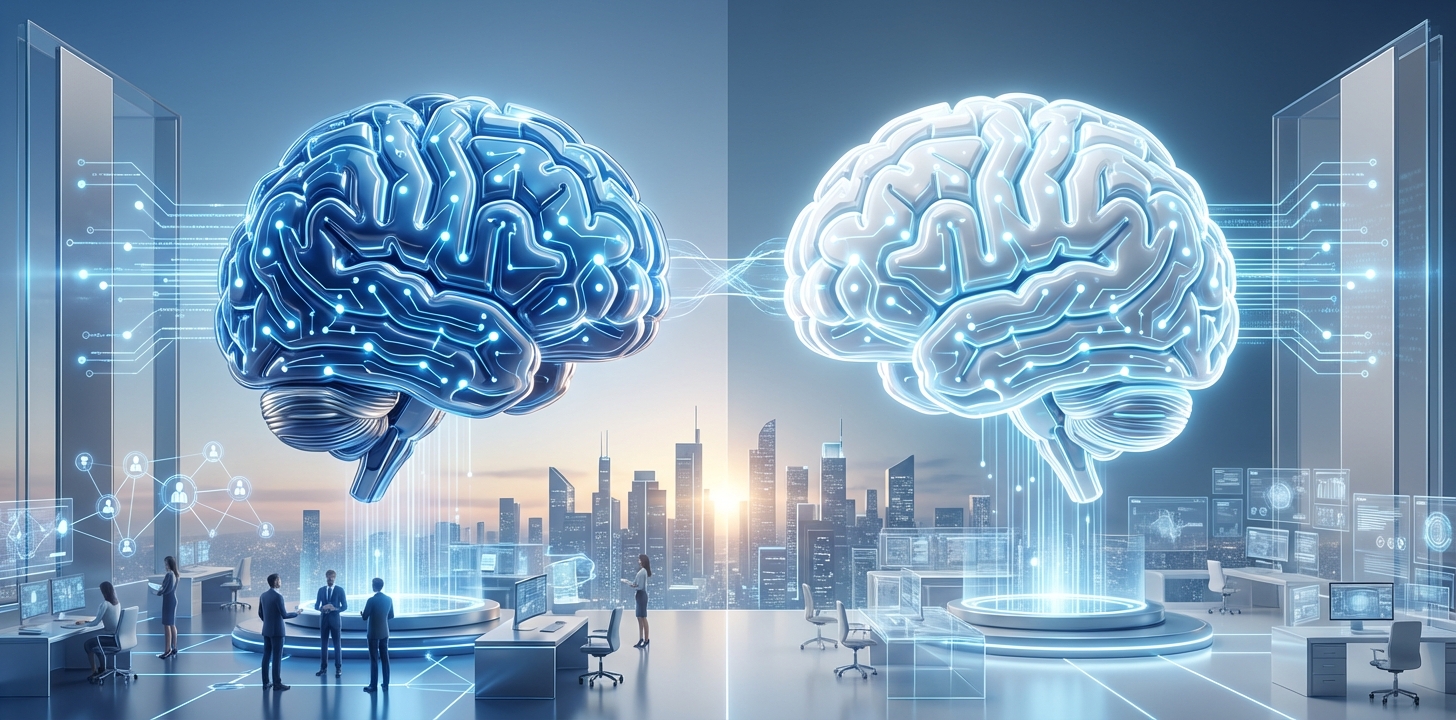
| Instead of relying on just one AI (like only using ChatGPT), smart companies are now using "Multi-Model Consensus Systems." This is where you ask GPT-5, Claude 4.6, and Gemini 3.1 the same question simultaneously. A "judge" model then looks at all three answers and combines them into one perfect response. | |||
| Recent evaluations show that this "consensus" method matches or even outperforms the best individual models in expert-level fields like medicine and law. [19] | |||
| Think of it like having a board of directors for every single task you do. One AI might be great at the logic, another at the creative flair, and the third at the technical details. Together, they are nearly invincible. |
Fun Fact: The "Transformer" Paper
Did you know that almost every AI model we use today—from GPT-5 to Gemini—is based on a single research paper from 2017 called "Attention Is All You Need"? It introduced the "Transformer" architecture. Before this, AI struggled to understand the context of long sentences. The Transformer changed everything by allowing the model to "pay attention" to different parts of a sentence at the same time. [15]
Malaysia Watch
So, what does this mean for Malaysia? 🇲🇾
For the Malaysian workforce, 2026 is the year of the "Digital Leap." With the government’s focus on the digital economy, there is a massive opportunity for local SMEs (Small and Medium Enterprises) to use these AI agents to compete globally.
Imagine a small batik business in Terengganu. In 2024, they might have struggled to handle international customer service. In 2026, they can deploy a Claude-powered agent that speaks 50 languages, manages their global shipping logistics, and automatically updates their Instagram shop.
The "Malaysia Watch" takeaway: The barrier to entry for global business has never been lower. The challenge isn't the technology; it's the "AI Literacy" of our local talent. We need to move from being consumers of AI to being "Agent Architects."
What to Do Next
If you feel like you're falling behind, don't panic. Here is your 2026 AI Action Plan:
- Stop "Chatting," Start "Prompting for Action": Instead of asking "What is a marketing plan?", try "Create a marketing plan in a Word doc, find three relevant images on Unsplash, and save them all to a folder named 'Project X' on my desktop." [7]
- Diversify Your AI Portfolio: Don't stick to just one model. Use GPT-5.4 for deep strategy, Claude 4.6 for "hands-on" computer tasks, and Gemini 3.1 for your mobile workflow.
- Audit Your Routine: Look for any task that requires "Copying from App A and Pasting into App B." These are the first tasks you should hand over to an AI agent. 🤖
- Focus on the "Human" Skills: As AI gets better at "doing," humans must get better
Found this article helpful? Share it with others!
Quick AI FAQ
How does this AI development affect Malaysian businesses?
Local businesses can leverage these AI breakthroughs to automate repetitive tasks, improve customer engagement via smart chatbots, and scale content production with 80% lower costs.
Is it safe to integrate AI into existing workflows?
Yes, when implemented with professional oversight. We focus on secure, privacy-compliant AI integrations that align with Malaysia's PDPA regulations.
Where can I get help with AI implementation in Penang?
JOeve Smart Solutions provides on-site and remote AI consultation for SMEs in Penang and across Malaysia, specializing in web apps, chatbots, and video automation.