The 2026 AI Breakthrough: Why Malaysia is the New Global Powerhouse

The 2026 AI Breakthrough: Why Malaysia is the New Global Powerhouse
Imagine waking up in 2026 and realizing you haven't written a single line of "boring" email or basic code in months. Your AI agent didn't just suggest a reply; it negotiated a contract while you were asleep, checked your calendar, and even booked a celebratory dinner at that new place in Kuala Lumpur. We are no longer in the era of "chatting" with a bot; we have entered the age of the AI Partner. 🤖
The shift is tectonic. For years, we treated AI like a fancy search engine, but as we move deeper into 2026, the technology has moved into our physical world and our core infrastructure. From factories that "think" to software that builds itself, the line between human intent and digital execution has almost completely vanished. It’s exciting, a little bit scary, and moving faster than anyone predicted.
Why This Matters
In plain English: AI is graduating from being a "cool tool" on your phone to being the "engine" of the entire economy. If 2023 was the year of the chatbot and 2024 was the year of the video generator, 2026 is the year of the Action Agent. These are systems that don't just talk—they do. They manage supply chains, write complex software from scratch, and even run physical robots in manufacturing plants with almost zero human intervention [4].
For the average person, this means the "barrier to entry" for starting a business or building an app has hit zero. You don't need to know Python or Java anymore; you just need to know how to describe your vision. This democratization of creation is the biggest shift in human productivity since the industrial revolution. But it also means the job market is shifting beneath our feet faster than we can reskill. 🏃♂️
The Big Story
The headline for 2026 is the total revolution in how we build things. According to recent industry insights, AI coding tools have moved beyond simple autocomplete. They are now "reasoning engines" capable of testing and deploying entire websites or games autonomously [4]. This isn't just about saving time; it’s about a new kind of creativity where a single individual can run a company that previously required a team of fifty.
Microsoft and IBM are signaling that AI is becoming a "true partner" in the workplace [6]. Think of it like this: your AI isn't a tool you open; it's a teammate that sits in your meetings, takes notes, assigns tasks, and follows up on them. It’s the death of "admin work." 📉
| Feature | 2024 AI (The Assistant) | 2026 AI (The Partner) |
|---|---|---|
| Primary Task | Writing text/generating images | Executing multi-step workflows |
| Coding | Suggests snippets of code | Builds, tests, and deploys apps |
| Physical World | Limited to digital screens | Controls robots and factory floors |
| Reasoning | Follows direct prompts | Anticipates needs and acts |
| Wait, what? We’re also seeing a massive surge in "Physical AI." Companies like ABB and Google are now integrating AI directly into industrial robotics to boost ROI in factory automation [9]. This means the AI isn't just living in the cloud; it's physically moving boxes, assembling cars, and managing warehouses with a level of precision that makes human error a thing of the past. | ||
| US Watch | ||
| In the United States, the focus has shifted from "How do we build it?" to "Who gets to control it?" A massive political battle is brewing. Groups opposed to strict AI regulations are reportedly pouring about $265 million into the 2026 elections [11]. This is an unprecedented amount of money aimed at ensuring that innovation isn't "strangled" by government oversight. | ||
| The target? Politicians who want to put "guardrails" on how AI models are trained and used. This highlights a massive divide: the Silicon Valley elite who want to move fast and break things, and the regulators who are worried about job displacement and deepfakes. Here’s what everyone’s missing: the money being spent on these elections suggests that the tech giants view 2026 as the "point of no return" for AI policy. | ||
| China Watch | ||
| While the US fights over policy, China is focused on raw deployment and efficiency. New models like MiniMax M2.7 are pushing the boundaries of what large language models can do in terms of speed and cost-effectiveness [7]. China is doubling down on the "AI for Industry" play, aiming to be the world's first fully AI-integrated economy. | ||
| There is a noticeable shift in Chinese AI strategy toward "sovereign AI"—building models that are entirely independent of Western hardware or data. This is creating a "splinternet," where the AI you use in Shanghai might think and behave very differently from the one you use in Seattle. 🌏 | ||
| Global Signal | ||
| Globally, the signal is clear: AI is no longer a "tech sector" story; it's a "national security" story. Global AI summits are now as important as G7 meetings. The world is realizing that the country with the best AI infrastructure will likely lead the global economy for the next fifty years. | ||
| Did you know? By 2026, it is predicted that over 90% of online content will be AI-generated or AI-augmented. The "human-only" internet is effectively over. | ||
| The trend toward "Quantum-AI" is also picking up steam. Experts believe that by late 2026, the intersection of quantum computing and AI will allow us to solve climate and medical problems that would have taken a thousand years for a traditional computer to figure out [5]. | ||
| Malaysia Watch | ||
| Now, let’s talk about the real "dark horse" in this race: Malaysia. 🇲🇾 | ||
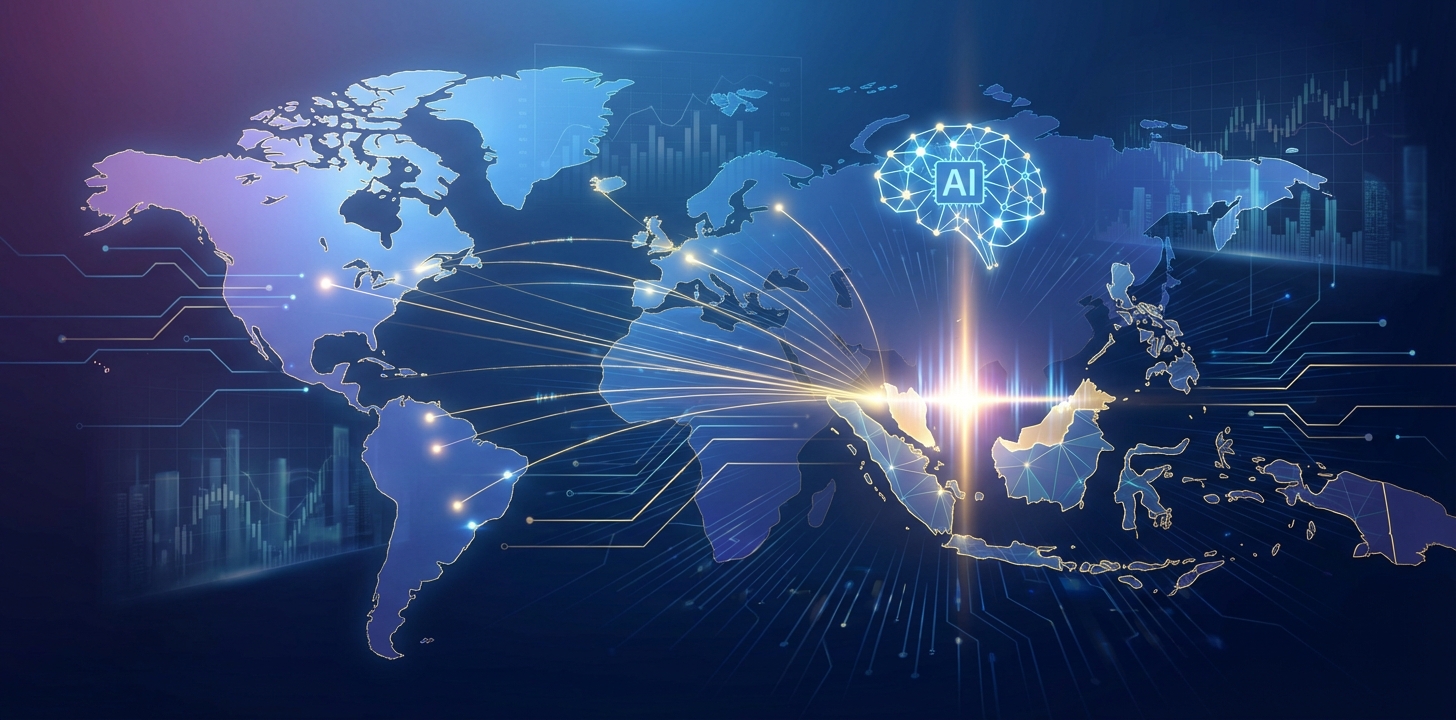
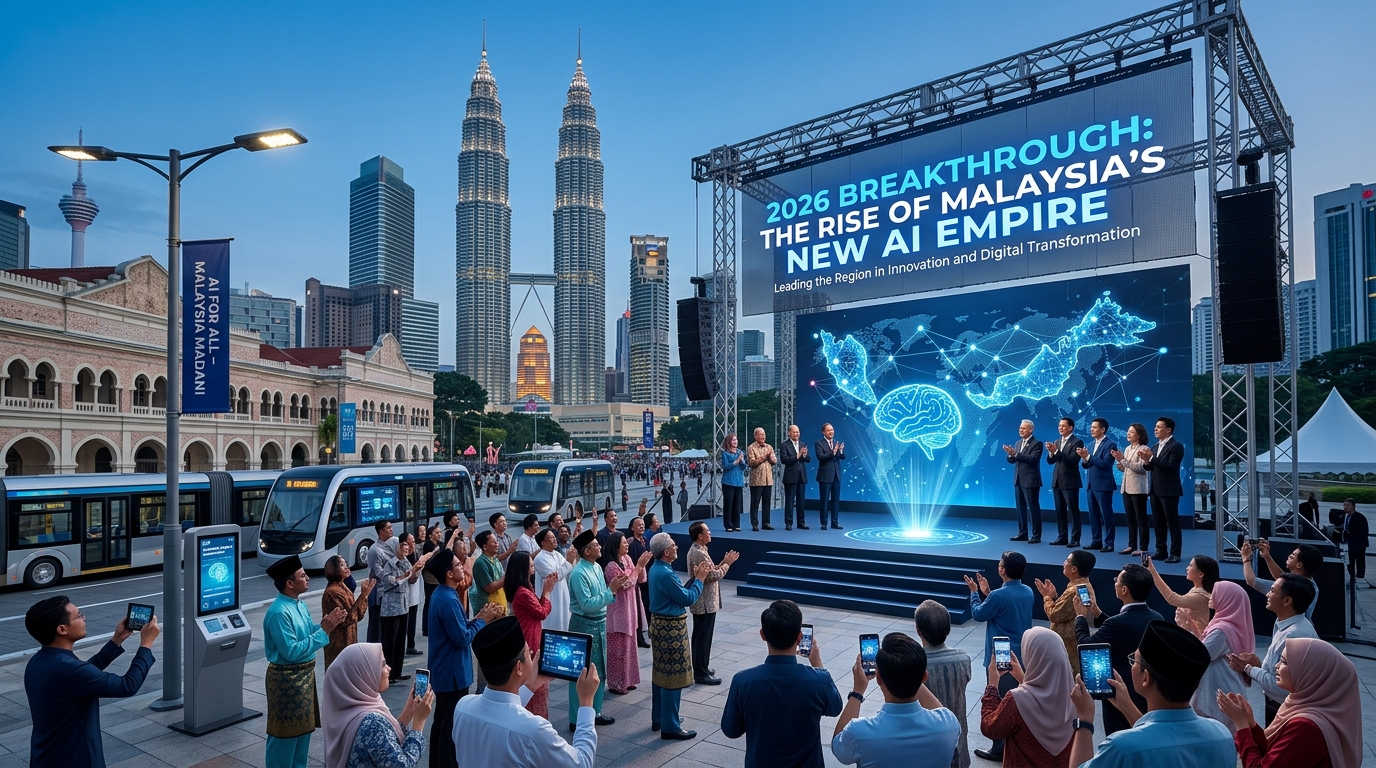
| Malaysia is currently undergoing a massive AI transformation, positioning itself as the "AI Hub of Southeast Asia." With massive investments from companies like Nvidia, Google, and Microsoft into local data centers, Malaysia is no longer just a "semiconductor testing" ground—it’s becoming the brain of the region’s digital economy. | ||
| The Malaysian government is aggressively pushing AI policy to attract global talent. Why? Because Malaysia offers the perfect "Goldilocks" environment: great infrastructure, a tech-savvy workforce, and a strategic location between the East and West. For local businesses, the opportunity is huge. Whether it’s using AI to optimize palm oil yields or deploying AI agents in the booming fintech sector in KL, the "Malaysia AI Roadmap" is setting a gold standard for developing nations. | ||
| Wait, what? There are even discussions about "AI Special Economic Zones" in Malaysia where companies can test autonomous drones and physical AI robots with minimal red tape. If you’re a tech founder, Malaysia is looking a lot more attractive than the high-cost hubs of the past. | ||
| What to Do Next |
- Audit Your Workflow: Look at your daily tasks. If a task is repetitive and digital, assume an AI agent will be able to do it by the end of 2026. Start learning how to "manage" AI rather than just "using" it.
- Invest in "Human-Only" Skills: As AI takes over coding and data analysis, "soft skills"—empathy, complex negotiation, and high-level strategy—become more valuable. Double down on what makes you human. 🧠
- Explore the New Tools: Don't just stick to ChatGPT. Check out new arrivals like Team9 or MiniMax M2.7 to see how the landscape is shifting [7].
- Watch the Policy: Keep an eye on the 2026 elections and local Malaysian regulations. The rules written this year will determine who owns the future.
TL;DR - 2026 is the Year of the Agent: AI is moving from "talking" to "doing," with autonomous agents handling everything from coding to physical manufacturing [4].
- Massive Political Stakes: Over $265 million is being spent in the US to influence AI regulation, highlighting a massive battle for the future of tech control [11].
- Malaysia is Rising: Through strategic investment and policy, Malaysia is becoming the premier AI hub for Southeast Asia, moving beyond hardware into high-level AI services. 🚀
- Physical AI is Real: AI is no longer just on your screen; it’s entering factories and warehouses, fundamentally changing the ROI of automation
Found this article helpful? Share it with others!
Quick AI FAQ
How does this AI development affect Malaysian businesses?
Local businesses can leverage these AI breakthroughs to automate repetitive tasks, improve customer engagement via smart chatbots, and scale content production with 80% lower costs.
Is it safe to integrate AI into existing workflows?
Yes, when implemented with professional oversight. We focus on secure, privacy-compliant AI integrations that align with Malaysia's PDPA regulations.
Where can I get help with AI implementation in Penang?
JOeve Smart Solutions provides on-site and remote AI consultation for SMEs in Penang and across Malaysia, specializing in web apps, chatbots, and video automation.