Shocking 2026 AI Breakthrough Reveals Why Malaysia Is Winning Big
Shocking 2026 AI Breakthrough Reveals Why Malaysia Is Winning Big
As the 2026 AI revolution accelerates, Malaysia emerges as a surprise leader while giants like ByteDance and Google battle for dominance. Here is what's next.
Imagine waking up and realizing that the "future" everyone talked about in 2023 isn’t just coming—it’s already here, and it looks nothing like we expected. We’ve moved past the era of simple chatbots that help you write a polite email to your boss. In 2026, AI has become the very nervous system of our global economy.
The shift is so massive that tech giants are literally gutting their old structures to feed the AI beast. We’re seeing companies like Oracle and Block (the parent of Square and Cash App) eliminate tens of thousands of roles not because they are failing, but because they are pivoting every single cent toward AI infrastructure [12]. It’s a "burn the boats" moment for the tech industry, and the smoke is visible from every corner of the globe. 🤖
Why This Matters
In plain English: we are witnessing the Great Reallocation. If you thought AI was just a tool, think again. It’s now the foundation. When a company like Oracle cuts 30,000 employees to redirect $10 billion into AI, it’s telling us that human-led administrative processes are being replaced by autonomous systems at a scale we’ve never seen [12].
For the average person, this means the "AI Skills Gap" is no longer a buzzword—it’s a survival metric. By 2026, AI is expected to be a "true partner" in the workplace, boosting everything from research momentum to infrastructure efficiency [3]. If you don't know how to dance with the bots, you're going to be left off the dance floor.
Wait, what? Does this mean all jobs are gone? Not exactly. It means the nature of work has shifted from "doing" to "directing." We are moving from being the writers of code to the architects of systems, thanks to breakthrough AI coding tools that allow almost anyone to build sophisticated games and websites with just a few prompts [4].
The Big Story
The headline story of 2026 is the rise of the "Agentic Economy." Meta recently made waves by acquiring Moltbook, an AI agent social network that initially went viral for having "fake" posts—essentially bots talking to bots [2]. While that sounds like a digital ghost town, it’s actually a goldmine for training AI to understand social nuance and complex human-like interactions.
Microsoft has identified seven key trends for 2026 that change the game. AI is no longer a sidekick; it’s a collaborator that manages our security, streamlines our research, and makes our infrastructure "smart" enough to manage itself [3]. Think of it like moving from a bicycle to a self-driving Tesla. You’re still the passenger deciding the destination, but you’re no longer pedaling.
Here’s a quick comparison of how things have changed in just a few short years:
| Feature | AI in 2023 | AI in 2026 |
|---|---|---|
| Primary Use | Writing essays/emails | Full-scale autonomous agents |
| Coding | Copilot suggests lines | AI builds entire apps from a prompt |
| Workforce | AI as a "cool tool" | AI as a core infrastructure requirement |
| Social Media | Human-generated content | Bot-to-bot interaction networks (Moltbook) |
| Hardware | GPU shortage | Custom AI silicon (Nvidia/ByteDance) |
| "AI coding tools are revolutionizing how we write, test, and deploy code, making it easier and faster to build sophisticated websites," notes a recent report on breakthrough technologies [4]. This democratization of creation is the "Big Bang" moment for the 2026 creator economy. 🚀 | ||
| US Watch | ||
| In the United States, the focus has shifted from "Can we build it?" to "How do we stop the bad guys from using it?" Wisconsin lawmakers have recently introduced a bill specifically aimed at curbing fraudulent activities involving generative AI and deepfakes [5]. It’s a sign that the "Wild West" era of AI is coming to an end as regulation catches up. | ||
| Meanwhile, Google is doubling down on making AI invisible. They’ve rolled out Gemini capabilities directly into Google Docs, making the AI a seamless part of your writing process rather than a separate tab you have to visit [2]. It’s about "Experience AI," where the technology disappears into the products we already use [7]. | ||
| However, the corporate landscape is brutal. The massive layoffs at Oracle and Block show that American tech is in a period of "creative destruction." They are tearing down the old to build the new, and the human cost is significant. Over 30,000 roles are being sacrificed at the altar of AI efficiency [12]. | ||
| China Watch | ||
| Despite heavy US sanctions and export controls, China’s tech giants are finding ways to thrive. ByteDance, the parent company of TikTok, has reportedly secured access to top-tier Nvidia AI chips to assemble massive computing power [1]. This is a huge "Wait, what?" moment for global regulators. | ||
| China isn't just playing catch-up; they are specializing. While the US focuses on LLMs (Large Language Models), China is making massive strides in "Physical AI." This includes everything from factory automation to humanoid robots designed for complex labor [9]. |
Fun Fact: Did you know that some startups are now building "tow trucks for space" powered by AI? These machines are designed to clean up orbital debris using autonomous navigation [9].
Global Signal
Worldwide, the signal is clear: AI is moving into the physical world. ABB and other industrial giants are using physical AI simulations to boost ROI for factory automation [10]. We are moving beyond the screen and into the warehouse.
The global social media landscape is also being rewritten. Tools like FeedHive and Buffer are now using AI not just to schedule posts, but to "recycle" content and tailor it specifically for different cultural contexts across the globe [14]. The world is becoming smaller, but the noise is getting louder.
Malaysia Watch
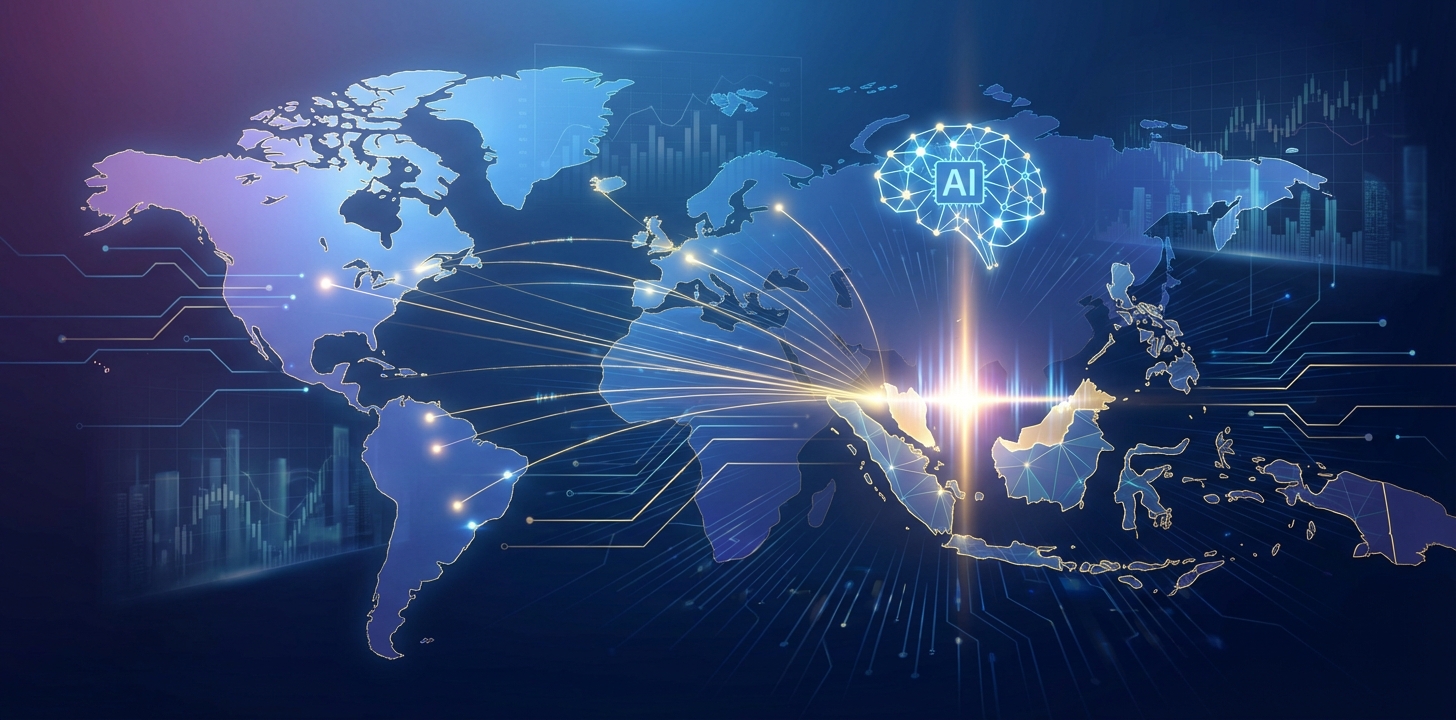
Now, let’s talk about why Malaysia is the "dark horse" of 2026. While the US and China fight for chip supremacy, Malaysia has quietly positioned itself as the AI powerhouse of Southeast Asia. 🇲🇾
The Malaysian government’s focus on AI transformation is paying off. By investing in data center infrastructure and creating "AI-friendly" economic zones, Malaysia is attracting the very companies that are fleeing high costs elsewhere. The country is no longer just a "semiconductor hub"—it’s becoming an "AI Intelligence Hub."
Here’s why Malaysia is winning:
- Strategic Neutrality: Malaysia remains a preferred partner for both Western and Eastern tech firms, allowing a unique flow of technology and talent.
- Infrastructure Boom: Massive investments in AI-ready data centers have made Malaysia the backbone of the regional digital economy.
- Policy Clarity: Unlike many nations struggling with vague AI laws, Malaysia has pushed for clear frameworks that encourage innovation while protecting local interests.
For Malaysians, this is a "gold rush" moment. There are unprecedented opportunities in AI ethics, data management, and AI-driven manufacturing. The local talent pool is pivoting from traditional IT
Found this article helpful? Share it with others!
Quick AI FAQ
How does this AI development affect Malaysian businesses?
Local businesses can leverage these AI breakthroughs to automate repetitive tasks, improve customer engagement via smart chatbots, and scale content production with 80% lower costs.
Is it safe to integrate AI into existing workflows?
Yes, when implemented with professional oversight. We focus on secure, privacy-compliant AI integrations that align with Malaysia's PDPA regulations.
Where can I get help with AI implementation in Penang?
JOeve Smart Solutions provides on-site and remote AI consultation for SMEs in Penang and across Malaysia, specializing in web apps, chatbots, and video automation.