Revealed: The 2026 AI Shift Turning Every Robot into Your Assistant
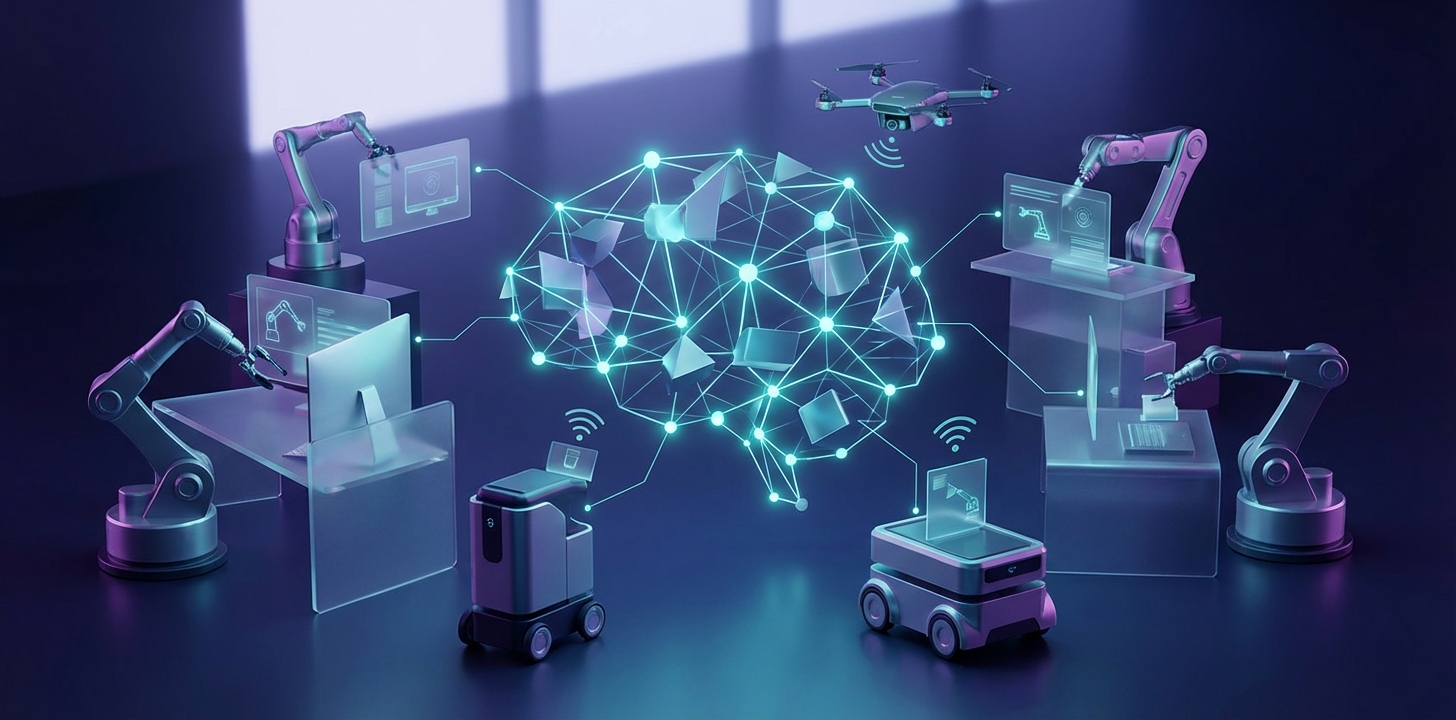
Revealed: The 2026 AI Shift Turning Every Robot into Your Assistant
Imagine walking into your local cafe and seeing a sleek, metallic barista not just pressing buttons, but steaming milk to a perfect micro-foam while chatting with you about the morning news. Meanwhile, back at your office, an "Agentic AI" has already sorted your messy inbox, rescheduled three meetings based on your sleep patterns, and drafted a proposal that sounds exactly like you.
This isn't a scene from a sci-fi movie; it’s the reality of 2026. For years, we’ve treated AI like a smart encyclopedia—something we talk to. But this year, the script has flipped. AI has officially moved from the screen into the physical world. It’s no longer just thinking; it’s doing. 🤖
Why This Matters
In plain English: we are moving from "Generative AI" (stuff that makes text and pictures) to "Agentic AI" (stuff that completes tasks). Think of it like the difference between a travel website that gives you flight options and a personal assistant who actually books the ticket, reserves the hotel, and handles the visa application without you lifting a finger.
This matters because it solves the "productivity wall." We’ve spent two years playing with ChatGPT, but our to-do lists are still long. Agentic AI and the new wave of humanoid robots are designed to actually shorten those lists. For businesses, this means automation is no longer about rigid assembly lines; it’s about flexible, intelligent systems that can adapt to a chaotic world. 🌍
The Big Story
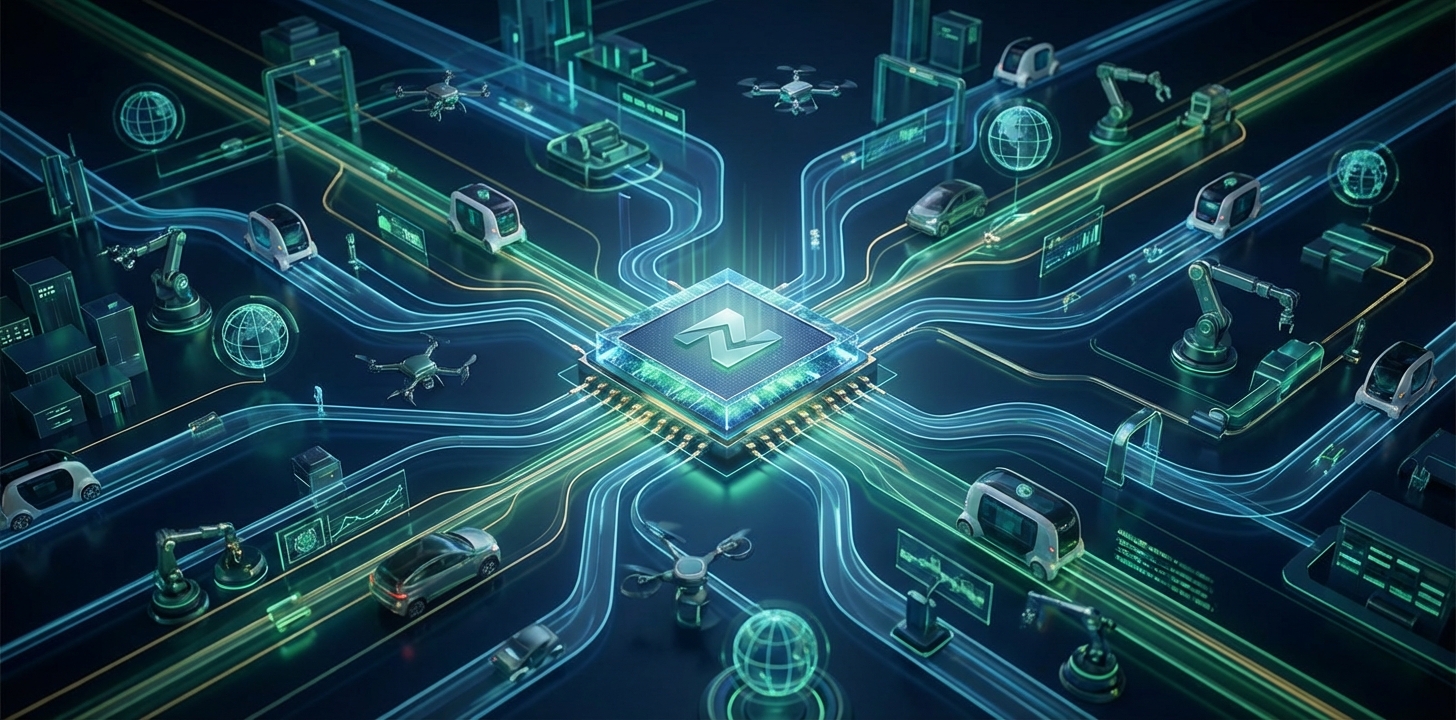
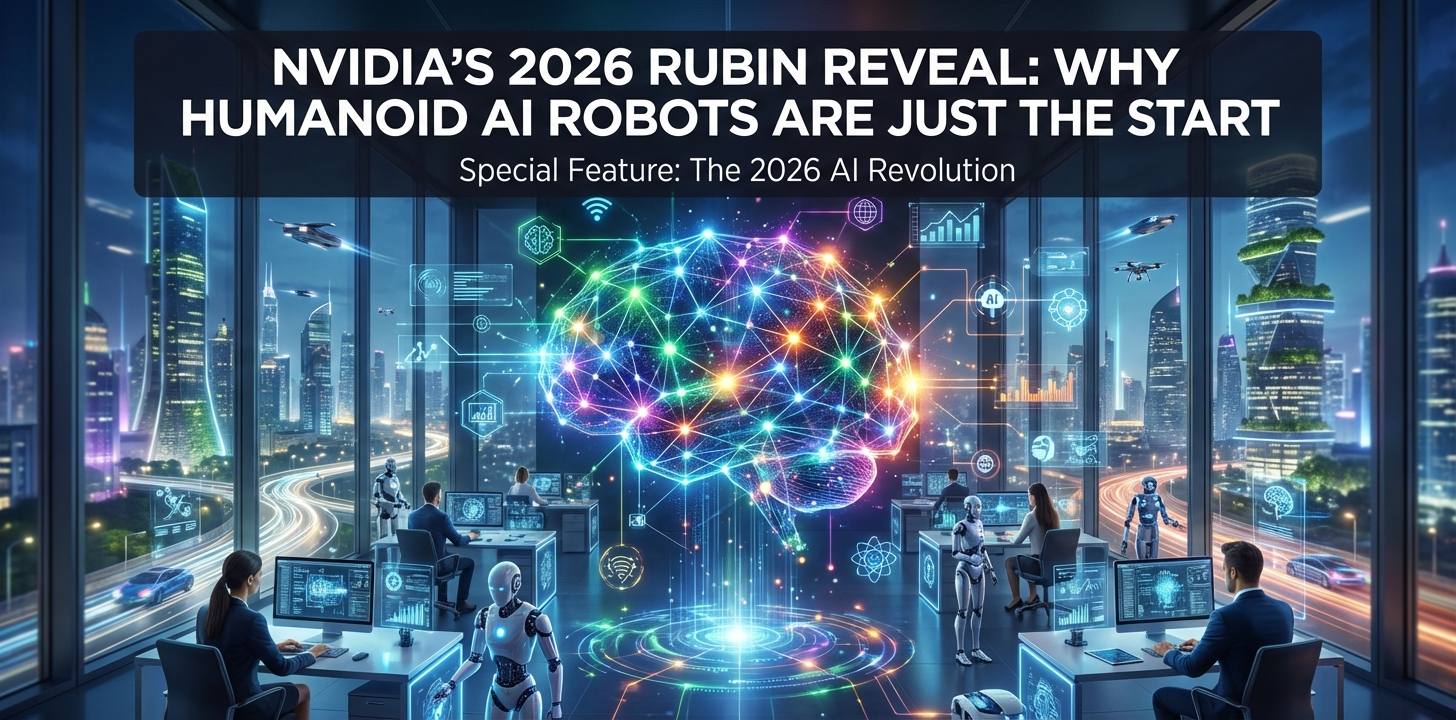
The headline event of the year just dropped at Nvidia’s GTC 2026. Jensen Huang took the stage to unveil the Groq 3 AI chip, a beast of a processor designed specifically to handle the massive reasoning requirements of autonomous agents [1]. But the real shocker? Nvidia is moving onto Intel’s turf with a new CPU server, signaling that the battle for the "brain" of the data center is getting personal.
While Nvidia is winning the hardware race today, analysts are already whispering about a shift. By 2027, major tech giants are expected to move toward in-house custom chips (ASICs) to save costs on inference [2]. This means we are in the "Gold Rush" phase where everyone is buying Nvidia's picks and shovels before they start making their own.
But what are these chips actually powering? The answer is "The Big 12." These are the top humanoid robots of 2026 that have finally moved out of the lab and into the wild [3]. We’re seeing robots that can pour lattes and, more importantly, robots that are finally learning the "Holy Grail" of domestic chores: folding laundry [4].
Wait, what? Why is folding clothes so hard? While a computer can beat a grandmaster at chess, identifying the edge of a crumpled t-shirt and manipulating it with soft fingers requires a level of spatial reasoning that has stumped AI for decades. In 2026, thanks to "General Purpose" AI models, robots are finally cracking the code of the physical world.
| Feature | 2024 AI (Chatbots) | 2026 AI (Agents & Humanoids) |
|---|---|---|
| Primary Output | Text, Code, Images | Physical Tasks, Workflow Completion |
| Interaction | User-led (Prompting) | Autonomous (Goal-oriented) |
| Hardware | Cloud Servers | Edge Devices & Humanoid Bodies |
| Best Skill | Writing an email | Organizing the entire project |
| US Watch | ||
| In the United States, the focus is on the "Billion-Dollar Infrastructure Club." We are seeing mind-boggling deals where Meta, Microsoft, and Oracle are pouring tens of billions into specialized AI data centers [10]. This isn't just about more servers; it’s about a complete redesign of the hardware supply chain [9]. | ||
| Silicon Valley is currently obsessed with "Quantum AI." Google’s Quantum AI lab is working to merge quantum computing with large-scale AI models to create "error-corrected" computations that were previously impossible [5]. If traditional AI is like a fast car, Quantum AI is like a teleportation device. It allows AI to explore every possible solution to a problem simultaneously, rather than one by one [6]. 🇺🇸 | ||
| China Watch | ||
| While the US dominates the software and high-end chips, China is doubling down on the "Hardware Body." Chinese manufacturers are leveraging their massive industrial base to mass-produce humanoid components. They are betting that while the US builds the "brain," China will build the "muscles"—the actuators, sensors, and limbs that make robots affordable for the average factory. 🇨🇳 | ||
| There is a growing "Global Signal" here: the hardware supply chain is being stretched to its limits. Investors are no longer just betting on software startups; they are betting on the core physical infrastructure—the copper, the cooling systems, and the power grids—that make AI possible [11]. | ||
| Global Signal | ||
| The worldwide trend is clear: AI is becoming "embodied." In the industrial sector, robotic arms are no longer just following a script. They are using machine learning to adapt to variations in materials and identify defects in real-time [12]. This integration of AI and computer vision is transforming manufacturing from a rigid process into a living, learning ecosystem [13]. |
"Quantum computers will drive AI to new heights, enabling better accuracy and therefore better performance, and scalable sustainable growth." — Quantinuum Research Team [7]
This fusion of Quantum, AI, and Robotics is creating a "Triple Threat" that will likely redefine the global economy by the end of the decade. We are seeing a move toward "sustainable growth" where AI doesn't just consume energy but helps design more efficient ways to produce it.
Malaysia Watch
For Malaysia, the 2026 AI shift presents a massive "Middle-Ground" opportunity. As a hub for semiconductor packaging and testing, Malaysia is perfectly positioned to benefit from the AI infrastructure boom. The surge in demand for AI-driven chip design and data center components means that Malaysian tech parks in Penang and Johor are seeing a massive influx of investment [8]. 🇲🇾
But there’s a localized opportunity too: Agentic Automation for SMEs. Malaysian businesses can now use "AI Agents" to handle cross-border logistics and multi-language customer service, allowing a small shop in Kuala Lumpur to operate like a multinational corporation. The "Malaysia Watch" tip? Don't just buy the tools; look at how you can integrate these agents into the supply chain to compete with larger regional players.
What to Do Next
- Audit Your Workflows: Identify the repetitive "doing" tasks in your day—not just the "writing" ones. These are the prime candidates for the next wave of Agentic AI tools.
- Invest in "Hardware Literacy": If you're an investor or business leader, stop looking only at software. The real bottlenecks (and opportunities) are in the power grid, cooling tech, and specialized AI chips.
- Prepare for the "Robot Co-worker": In the industrial sector, start training your staff on how to manage and supervise AI-integrated robotic systems rather than just operating manual machines [14].
- Think Quantum-Ready: If you are in data science or high-level finance, start exploring how quantum algorithms can optimize your AI models for 10x better accuracy [7].
TL;DR
- Nvidia Groq 3: A new chip era begins as Nvidia takes on Intel in the CPU space for 2026 [1].
- Humanoids are Here: Top 12 robots are moving into homes and factories, finally learning complex tasks like folding laundry [3].
- Quantum Leap: Google and others are merging Quantum Computing with AI to solve the "accuracy" problem once and for all [5].
- Agentic Shift: AI is moving from a "chatbot" you talk to, to an "agent" that does your work for you.
#AI #LLM #AIAgents #AITools #ChinaAI #USAi #Nvidia2026 #HumanoidRobots #QuantumAI #FutureOfWork #Robotics #TechNews #SmartAutomation #MalaysiaTech
Found this article helpful? Share it with others!
Quick AI FAQ
How does this AI development affect Malaysian businesses?
Local businesses can leverage these AI breakthroughs to automate repetitive tasks, improve customer engagement via smart chatbots, and scale content production with 80% lower costs.
Is it safe to integrate AI into existing workflows?
Yes, when implemented with professional oversight. We focus on secure, privacy-compliant AI integrations that align with Malaysia's PDPA regulations.
Where can I get help with AI implementation in Penang?
JOeve Smart Solutions provides on-site and remote AI consultation for SMEs in Penang and across Malaysia, specializing in web apps, chatbots, and video automation.