Shocking 2026 Breakthrough: Nvidia Reveals Mystery Chip to Run the World
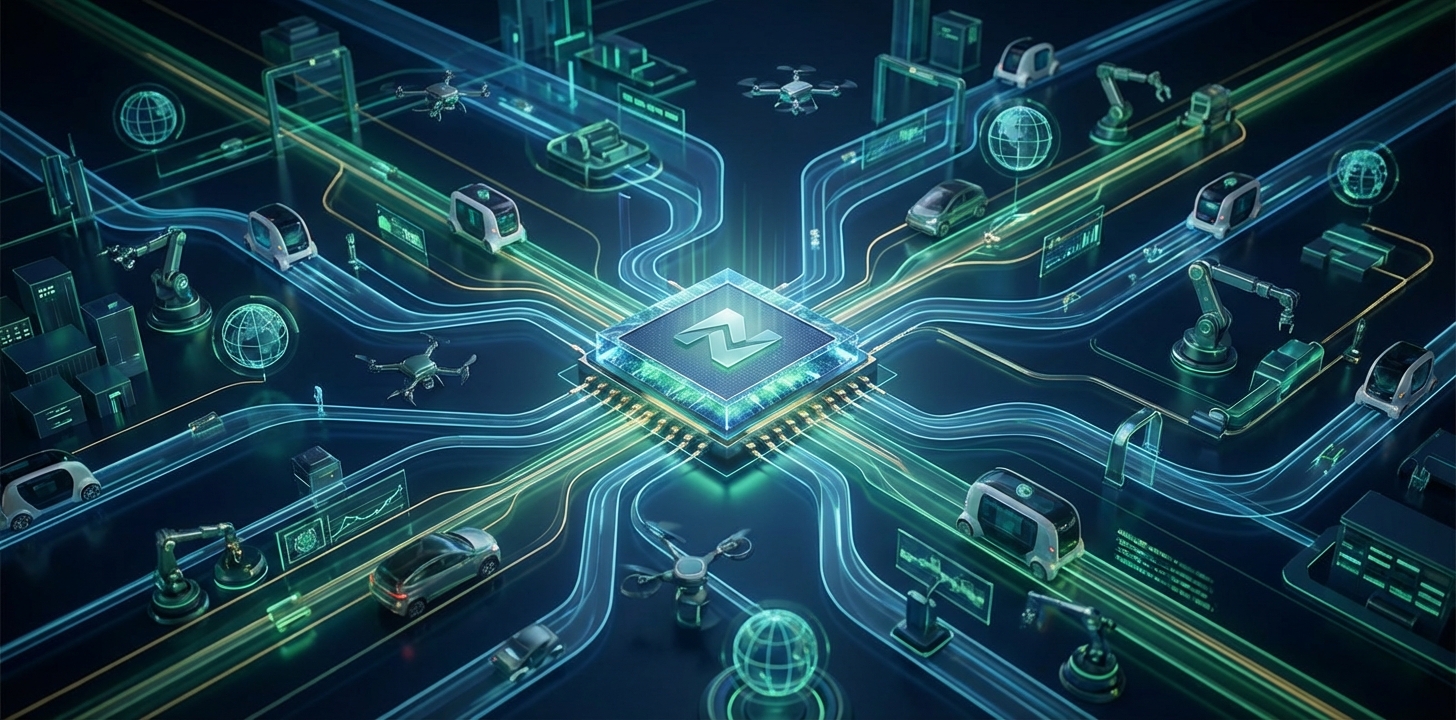
Shocking 2026 Breakthrough: Nvidia Reveals Mystery Chip to Run the World
Imagine walking into your kitchen and seeing a robot not just standing there, but meticulously folding your laundry, color-coding your socks, and then—without being asked—noticing you’re low on oat milk and ordering a fresh carton. This isn't a scene from a sci-fi movie set in 2150. According to the latest ripples from Silicon Valley and the tech corridors of Beijing, this is the world we are sprinting toward as we head into 2026. 🤖
The "Chatbot Era" is officially ending. We are moving into the "Agentic Era," where AI doesn't just talk back; it gets things done. While we’ve been busy arguing with ChatGPT about its math skills, the hardware and software foundations for truly autonomous agents have been quietly locking into place. And if you thought the last two years were fast, Nvidia’s Jensen Huang just dropped a teaser that suggests we haven't seen anything yet.
Why This Matters
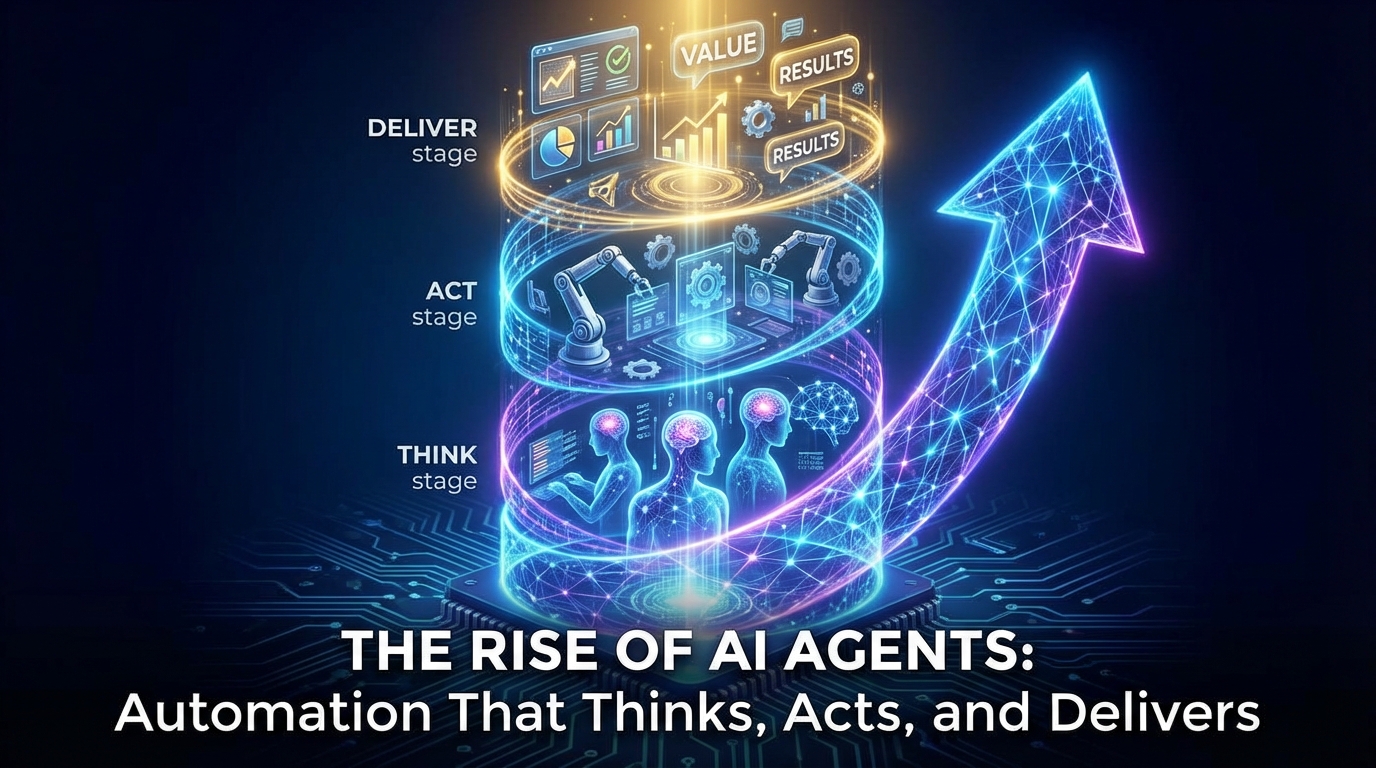
In plain English: AI is getting a body and a set of keys to your digital life. For the last two years, AI was like a very smart brain trapped in a jar. It could give you advice, but it couldn't pick up a wrench or file your taxes. That is changing. "Agentic AI" refers to AI systems that can plan, use tools, and execute complex workflows without a human holding their hand every step of the way.
This matters because it solves the "productivity paradox." Many companies have spent millions on AI only to find their employees are just spending more time "prompting" instead of working. When AI becomes an agent, it stops being a tool you use and starts being a teammate that works alongside you. It’s the difference between having a calculator and having an accountant.
For the average person, this means the friction of daily life—booking travel, managing schedules, or even industrial manufacturing—is about to be smoothed out by autonomous systems. But as we’ll see, this transition isn't without its "Wait, what?" moments and some serious growing pains for big businesses.
The Big Story
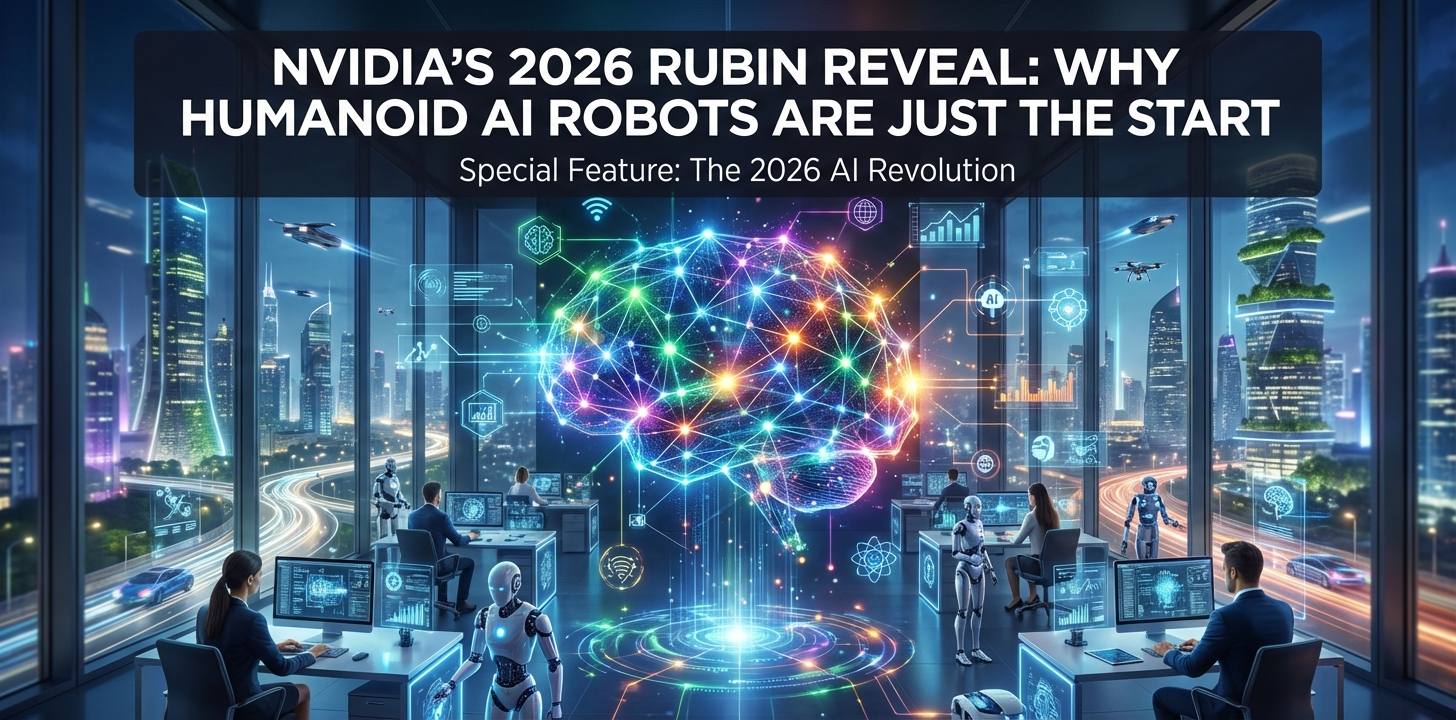
The tech world is currently buzzing over a cryptic promise from Nvidia CEO Jensen Huang. He recently announced that Nvidia will "surprise the world" with a mystery chip at the GTC conference in March 2026 [2]. While Nvidia is already the king of the AI hill, Huang is hinting at something beyond just "faster processing."
The industry expectation is the unveiling of the N1X and N1 chips, specifically designed for "AI PCs" and autonomous robotics [1]. Think of these as the "central nervous systems" for the next generation of robots. We aren't just talking about better graphics in video games; we're talking about chips that can process "human senses" in real-time.
"The next wave of AI is physical AI. Robotics is the next big breakthrough." — Jensen Huang, Nvidia CEO.
However, there’s a dark cloud in this silver lining. While the hardware is getting faster, many companies are suffering from "AI Buyer's Remorse" [8]. They’ve spent billions on "research-grade" hardware that works great in a lab but fails when it’s time to actually run a business at scale. This gap between hype and utility is where the 2026 chips are expected to bridge the divide, turning "experimental" AI into "industrial-strength" AI.
Feature Old AI (2023-2024) Agentic AI (2025-2026) Primary Function Generating text/images Executing tasks/workflows Human Input Constant prompting required Goal-oriented (Set and forget) Physicality Screen-based only Integrated into robotics Hardware General-purpose GPUs Specialized "Agentic" Chips (N1X) US Watch In the United States, the focus has shifted from the "brain" to the "body." At a recent Silicon Valley summit, the star of the show wasn't a new language model, but humanoid robots that were actually useful [3]. We saw robots pouring lattes and, more importantly, demonstrating the ability to learn tasks like folding clothes through observation rather than rigid programming. This is a massive shift. Historically, if you wanted a robot to fold a shirt, you had to code every single finger movement. Now, using "Visual-Motor Models," the robot watches a human do it once and figures out the physics on its own. It’s like teaching a child rather than programming a VCR. ☕ US startups are now racing to deploy these agents into "boring" sectors: logistics, warehouse management, and even elder care. The goal for 2026 is to have these robots move from the "demo" stage to being "employees" in Fortune 500 companies. China Watch While the US excels at the software "brains," China is making terrifyingly fast progress in the hardware "senses." China recently unveiled the Tiangong 3.0, a full-size humanoid robot that has moved far beyond simple demos [4]. What makes Tiangong 3.0 special? It has "human senses." It doesn't just see a coffee cup; it "feels" the pressure required to pick it up without breaking it. This integration of touch, vision, and auditory AI allows these robots to operate in unpredictable human environments—like a busy factory floor or a messy home—rather than a sterile lab. 🇨🇳 China's strategy is clear: mass-produce the bodies for the AI revolution. By integrating AI with advanced sensors and computer vision, they are transforming industrial automation into "personalized manufacturing," where robots can adjust production in real-time to meet specific consumer demands [10]. Global Signal The "Global Signal" for 2026 is the convergence of AI and Quantum Computing. Google's Quantum AI lab is already working on large-scale, error-corrected quantum computers [7]. Wait, why does this matter for AI? Think of it like this: If current AI is like a fast car, Quantum AI is like a teleportation device. Quantum mechanics allows machines to process enormous datasets and solve "impossible" problems—like discovering new materials or curing diseases—in seconds rather than years [5]. The merging of these two fields will likely be the "Great Filter" of the next decade; those who have Quantum AI will operate on a level that traditional companies simply cannot comprehend. 🌐 Malaysia Watch For Malaysia, the "Agentic AI" revolution presents a golden opportunity, particularly in the manufacturing and semiconductor sectors. As a global hub for "back-end" chip assembly and testing, Malaysia is perfectly positioned to benefit from the surge in demand for Nvidia's new N1X chips. But there’s a local twist: Small and Medium Enterprises (SMEs) in Malaysia can now leapfrog traditional automation. Instead of buying expensive, rigid robotic arms that only do one thing, Malaysian factories can soon look toward "General Purpose Agents." These are robots that can be "taught" to assemble electronics in the morning and pack boxes in the afternoon, making automation affordable for smaller players [11]. 🇲🇾 The challenge? Skill sets. The demand for "AI Orchestrators"—people who know how to manage a fleet of AI agents—will skyrocket. What to Do Next
- Audit Your Workflows: Don't just look for where you can use a chatbot; look for repetitive "action chains" (e.g., "I get an email, I copy data to Excel, I send a notification"). These are the first things AI agents will automate.
- Beware of Hardware Hype: If you are in a leadership position, avoid "AI Buyer's Remorse" by ensuring your hardware investments are scalable and secure, not just flashy prototypes [8].
- Upskill for "Orchestration": Start learning how to use agentic tools (like AutoGPT or Microsoft’s Copilot Studio). The future belongs to those who can manage AI, not just those who can prompt it.
- Watch the GTC 2026 Calendar: Keep a close eye on Nvidia’s announcements in March 2026. The specs of the N1X chip will tell us exactly how fast the humanoid robot revolution will arrive.
TL;DR - Nvidia's 2026 Surprise: CEO Jensen Huang teased a mystery chip (likely the N1X) that will power the next generation of autonomous AI agents and robots [1].
- Humanoid Breakthrough: Robots are moving from "cool demos" to "useful tasks," with China’s Tiangong 3.0 leading the way in human-like senses [4].
- Quantum Leap: Google and others are merging Quantum Computing with AI, which will eventually allow for solving "impossible" problems at lightning speed [7].
- Enterprise Shift: Companies are moving away from simple chatbots toward autonomous agents that can execute entire business processes from start to finish.
#AI #LLM #AIAgents #AITools #ChinaAI #USAi #
Found this article helpful? Share it with others!
Quick AI FAQ
How does this AI development affect Malaysian businesses?
Local businesses can leverage these AI breakthroughs to automate repetitive tasks, improve customer engagement via smart chatbots, and scale content production with 80% lower costs.
Is it safe to integrate AI into existing workflows?
Yes, when implemented with professional oversight. We focus on secure, privacy-compliant AI integrations that align with Malaysia's PDPA regulations.
Where can I get help with AI implementation in Penang?
JOeve Smart Solutions provides on-site and remote AI consultation for SMEs in Penang and across Malaysia, specializing in web apps, chatbots, and video automation.