AI Coding Assistants Surge in 2026: Revolutionizing Software Development
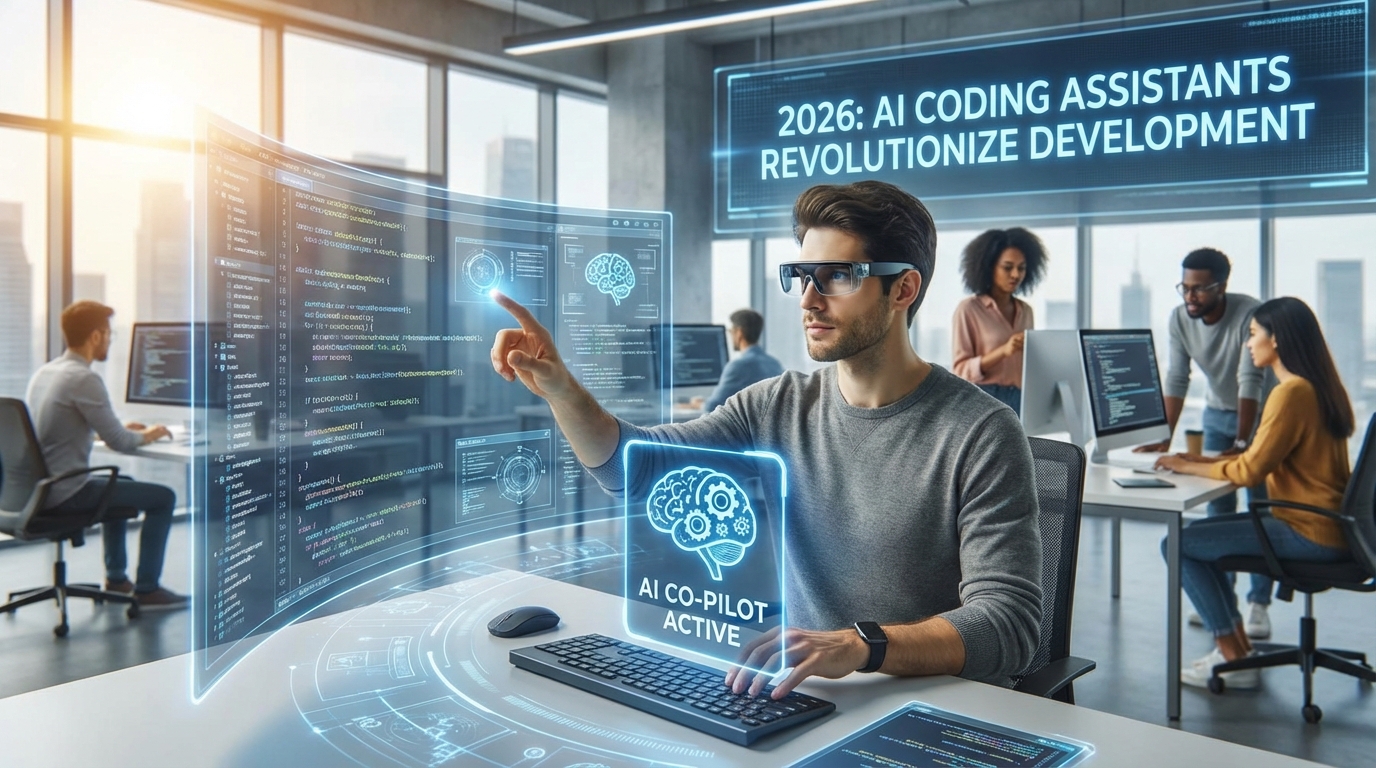
Excerpt: AI coding assistants are transforming software development. Discover the top platforms, automation tools, and the future of AI-powered programming in 2026.
Why This Matters
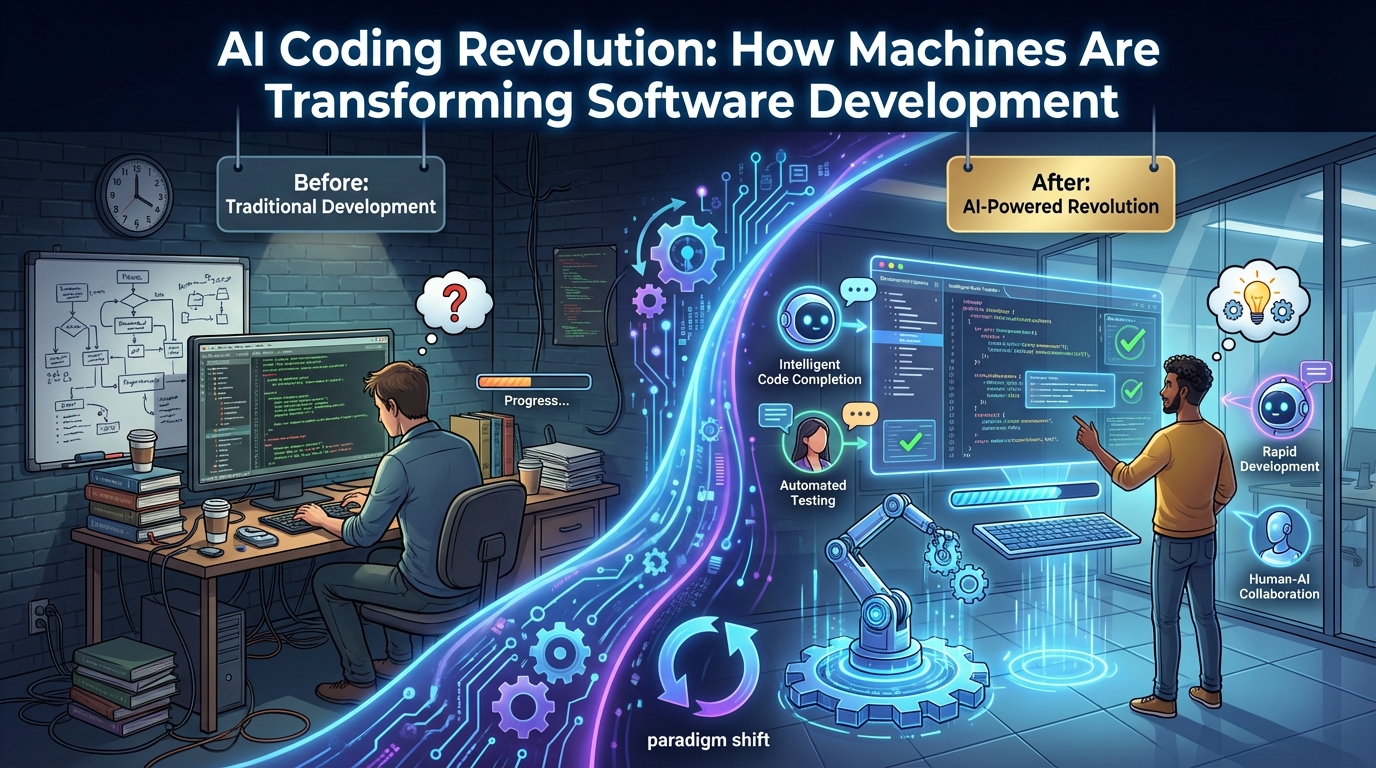
The rise of AI coding assistants and automation tools is reshaping the software development landscape in 2026. These tools, powered by sophisticated AI models, are no longer just glorified autocomplete features. They are becoming integral parts of the development workflow, capable of generating code, debugging, testing, and even designing entire software architectures. This shift promises to dramatically increase developer productivity, reduce time-to-market, and open up software development to a wider range of individuals, including those with limited coding experience. However, this also raises critical questions about the future role of human developers, the potential for bias in AI-generated code, and the security implications of relying heavily on automated systems. Ignoring these trends would leave developers and organizations at a significant competitive disadvantage.
Viral AI Stories
The buzz around AI coding assistants is reaching a fever pitch. Recent viral stories highlight both the potential and the pitfalls:
- The "AI-Generated App Store": A developer gained notoriety (and a healthy dose of skepticism) by creating a functional mobile app using only AI coding assistants and releasing it on the app store. While the app's functionality was basic, the speed of development – reportedly just a few hours – captivated the tech community. The contrarian view? Many questioned the app's security and maintainability, highlighting the need for human oversight even with advanced AI tools.
- The "Automated Bug Bounty Hunter": A cybersecurity firm announced a new AI agent specifically designed to identify and report vulnerabilities in software code. This "automated bug bounty hunter" reportedly discovered several critical flaws in popular open-source libraries, raising both excitement and concern about the potential for malicious use of such technology.
LLM & Models Watch
Large Language Models (LLMs) are the engines driving the current wave of AI coding assistants. Here’s what’s trending: - Specialized LLMs for Code: While general-purpose LLMs like GPT-4 can generate code, specialized models trained specifically on massive datasets of code are proving to be far more effective. These models, often fine-tuned for specific programming languages or development tasks, exhibit a deeper understanding of syntax, semantics, and coding best practices.
- Context-Aware Code Generation: The latest LLMs are now capable of generating code that is highly context-aware. They can analyze existing codebases, understand project requirements, and generate code that seamlessly integrates with existing systems. This ability to understand and adapt to complex contexts is a game-changer for large-scale software development projects.
- Model Fine-Tuning and Customization: Organizations are increasingly exploring the possibility of fine-tuning pre-trained LLMs with their own proprietary codebases. This allows them to create custom AI coding assistants that are specifically tailored to their unique development environments and coding styles. However, this approach also raises concerns about data privacy and intellectual property.
AI Agents & Tools Watch
Beyond basic code generation, AI agents are emerging as powerful tools for automating a wide range of software development tasks: - Agentic AI Platforms: Platforms like Beam AI, Google Vertex AI Agent Builder, and UiPath’s Agent Builder are gaining traction, offering comprehensive environments for designing, deploying, and managing AI agents. These platforms provide tools for building agents that can autonomously handle complex processes like invoice dispute resolution.
- AI-Powered Workflow Automation: Tools like n8n, Zapier, and Gumloop are integrating AI capabilities to automate entire software development workflows. These tools can automatically trigger builds, run tests, deploy code, and even monitor application performance, freeing up developers to focus on more creative and strategic tasks.
- AI Personal Assistants for Developers: Tools like Google Gemini and Microsoft Copilot are evolving into sophisticated AI personal assistants that can help developers manage their schedules, prioritize tasks, and find relevant information. While still in their early stages, these assistants have the potential to significantly improve developer productivity and reduce cognitive overload.
Global Signal
The adoption of AI coding assistants and automation tools is a global phenomenon, with significant implications for the software development industry worldwide: - Increased Developer Productivity: Studies show that developers using AI coding assistants can be up to 50% more productive than those who rely solely on traditional coding methods. This increased productivity is driving down software development costs and accelerating innovation.
- Democratization of Software Development: AI coding assistants are making it easier for individuals with limited coding experience to participate in software development. This democratization of software development has the potential to unlock a new wave of innovation and creativity.
- Skills Gap: The rise of AI coding assistants is also creating a skills gap in the software development industry. Developers need to acquire new skills in areas such as AI model training, prompt engineering, and AI ethics to effectively utilize these tools.
What to Do Next
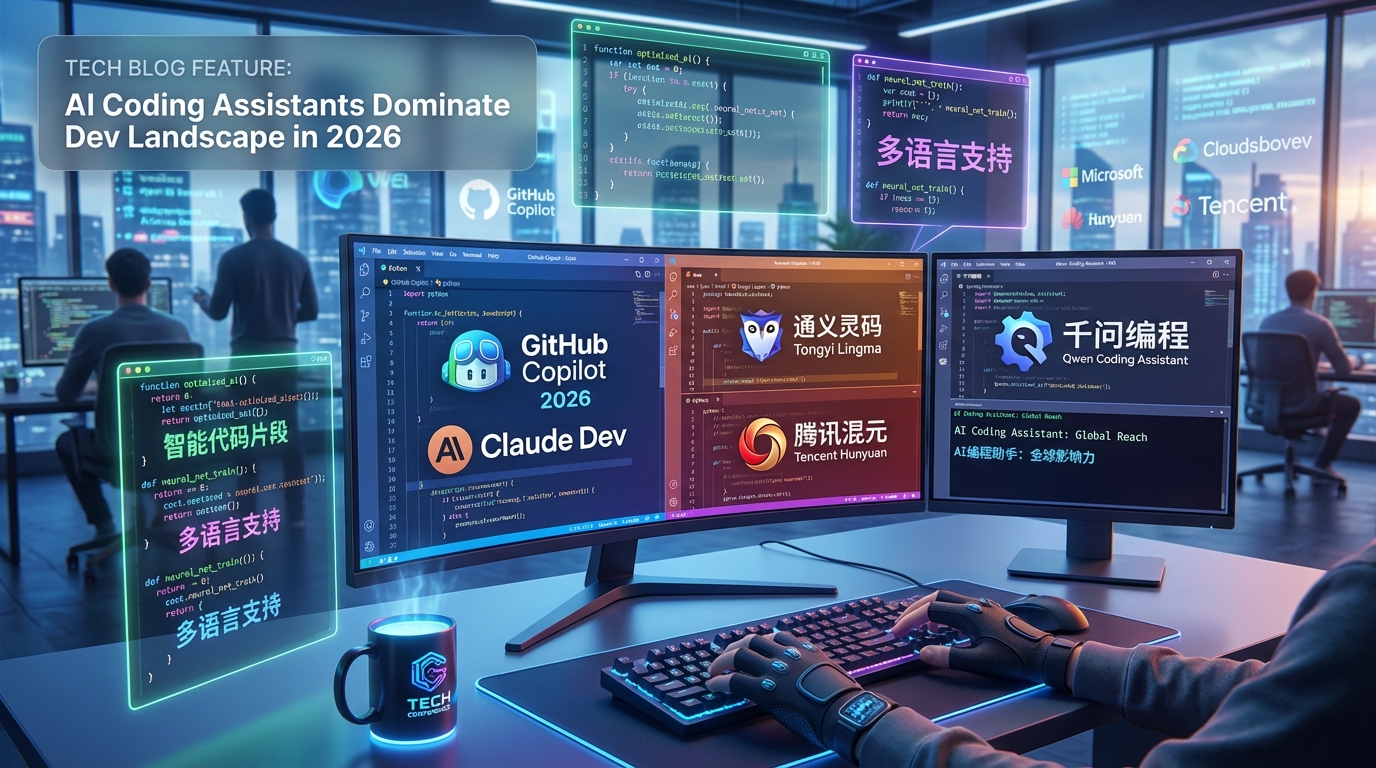
To stay ahead of the curve in this rapidly evolving landscape, consider the following: - Experiment with AI Coding Assistants: Try out different AI coding assistants like GitHub Copilot, Tabnine, and Amazon CodeWhisperer to see how they can improve your own coding workflow.
- Explore AI Automation Tools: Investigate AI-powered workflow automation tools like n8n and Zapier to automate repetitive tasks and streamline your development processes.
- Upskill in AI and Machine Learning: Take online courses or attend workshops to learn about the fundamentals of AI and machine learning. This will help you better understand how AI coding assistants work and how to use them effectively.
- Address the Ethical Implications: Consider the ethical implications of using AI coding assistants, such as the potential for bias in AI-generated code and the impact on human developers.
Watchlist: - New LLMs for Code: Keep an eye out for new and improved LLMs specifically designed for code generation.
- Agentic AI Platform Updates: Track the latest developments in agentic AI platforms like Beam AI and Google Vertex AI Agent Builder.
- AI-Powered Security Tools: Monitor the emergence of AI-powered security tools that can automatically identify and fix vulnerabilities in software code.
Tags: #AICoding #SoftwareDevelopment #AIAgents #LLM #Automation #AItools #Programming #AIWorkflow #DeveloperProductivity #MachineLearning #ArtificialIntelligence #CodeGeneration #DevOps #NoCode #2026
Found this article helpful? Share it with others!
Quick AI FAQ
How does this AI development affect Malaysian businesses?
Local businesses can leverage these AI breakthroughs to automate repetitive tasks, improve customer engagement via smart chatbots, and scale content production with 80% lower costs.
Is it safe to integrate AI into existing workflows?
Yes, when implemented with professional oversight. We focus on secure, privacy-compliant AI integrations that align with Malaysia's PDPA regulations.
Where can I get help with AI implementation in Penang?
JOeve Smart Solutions provides on-site and remote AI consultation for SMEs in Penang and across Malaysia, specializing in web apps, chatbots, and video automation.