
2026 AI Takeover: Why China’s New Agents are Changing Everything
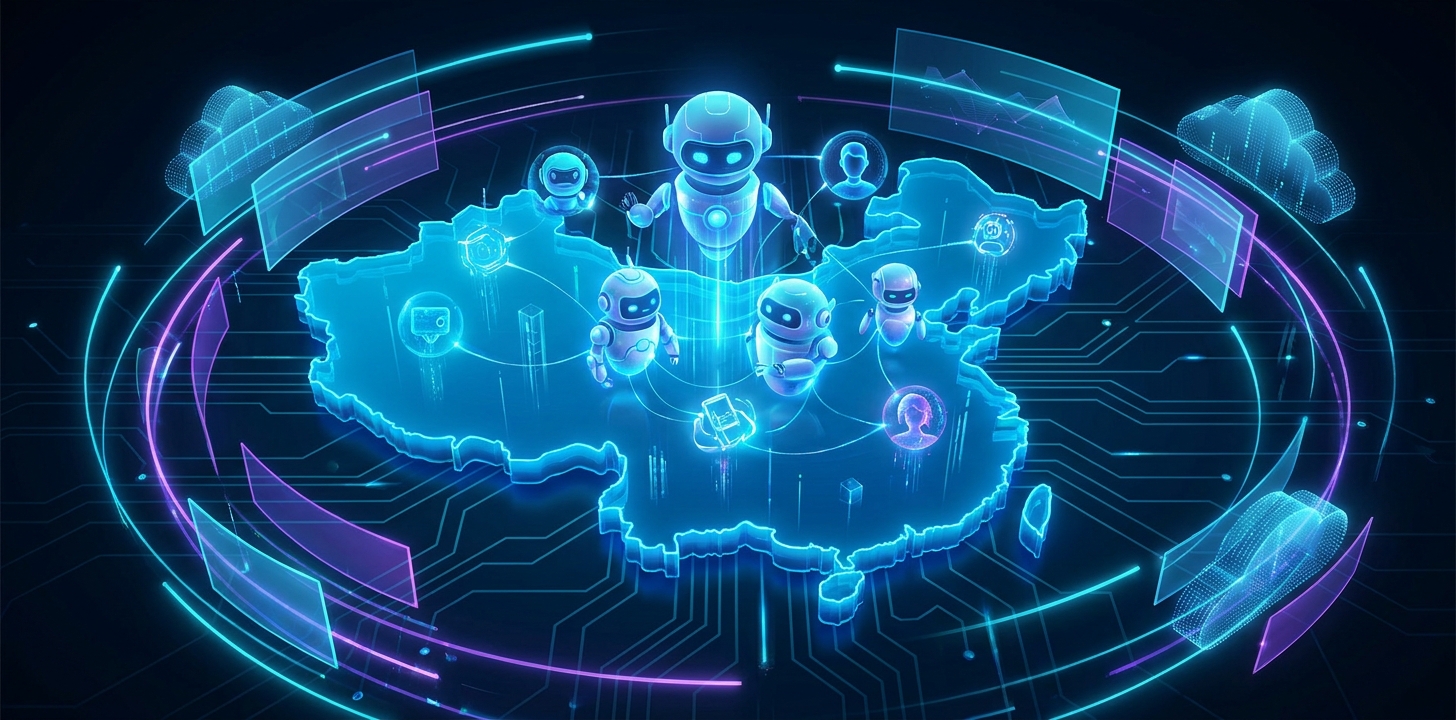
2026 AI Takeover: Why China’s New Agents are Changing Everything
Imagine a factory floor where the air doesn't smell like grease and exhaust, but hums with the quiet precision of electric servos. In a sprawling facility in China, a humanoid robot—fully articulated, powered by a "brain-like" neural network—rolls off the assembly line every 30 minutes [20]. This isn't a sci-fi movie trailer; it’s the reality of April 2026. While the world was busy arguing about chatbots, the physical world just got an AI upgrade that’s moving faster than anyone predicted.
But the real shockwave isn't just in the hardware. It’s in the "Token Economy." In Hong Kong, AI startups are no longer just "promising" tech—they are the new market titans. One company, Zhipu AI, saw its shares skyrocket by a staggering 570% since its January debut [2]. We are witnessing a fundamental shift where the "old guard" of tech is losing its thunder to a new generation of agile, agent-centric labs that are out-innovating and out-spending the giants.
Why This Matters
In plain English: the AI honeymoon phase is over, and the "Agent Era" has begun. For the past two years, we used AI to write emails or generate funny pictures. In 2026, AI has become an "agent"—a digital employee that can execute complex tasks, manage supply chains, and even star in movies.
If you think this is just a "tech thing," think again. When a company can mass-produce humanoid labor [19] or generate Hollywood-quality video with a single prompt, it changes the cost of everything. For consumers, this means cheaper goods and hyper-personalized entertainment. For businesses, it means the competitive landscape just shifted from "who has the most data" to "who has the most efficient agents."
The Big Story
The narrative of "Big Tech" is being rewritten in real-time. For decades, companies like Baidu and Tencent were the undisputed kings of the Eastern tech landscape. But as of March 2026, that "old guard" is losing its grip [1]. The spotlight has shifted to the "New Six" AI labs, with Zhipu AI and MiniMax leading the charge.
These aren't just software companies; they are the architects of a new financial phenomenon. MiniMax, for instance, saw its market capitalization briefly exceed some of the world's most established tech firms following its IPO [2]. Investors are pouring billions into these firms because they’ve solved the "efficiency" problem. While Western models are often criticized for being "compute-heavy" and expensive to run, Chinese labs have optimized their models to be "reasoning-first," allowing them to do more with less.
Wait, what? It gets crazier. UBS analysts are now suggesting that MiniMax’s stock could climb as high as 1380 HKD if its AI leadership continues to accelerate [4]. This isn't just hype; it's a massive capital migration. The "token economy"—where the value of a company is tied to the efficiency and volume of its AI-generated output—is officially the new gold rush.
| Feature | Zhipu AI | MiniMax | DeepSeek |
|---|---|---|---|
| Market Status | Public (HKSE) | Public (HKSE) | Private / Research-Heavy |
| Growth since IPO | +570% | +470% | N/A |
| Core Strength | Generalist Agents | Video & Creative | Reasoning & Math |
| Viral Breakthrough | GLM-5 Series | "Talkie" Ecosystem | DeepSeek-V3.2 |
| US Watch | |||
| While the East is focused on rapid IPOs and agent deployment, the US powerhouses—OpenAI, Anthropic, and Google—are doubling down on "Foundational Multimodality." The tension is palpable. OpenAI is rumored to be preparing a response to the "efficiency" surge by focusing on even deeper integration between its models and physical robotics. | |||
| However, the "US vs. China" gap is closing in ways that make Silicon Valley nervous. For the first time, Alibaba’s Qwen family of models has overtaken Meta’s Llama as the most downloaded open-source model series on Hugging Face [6]. This is a massive symbolic blow. It means the global developer community is increasingly building their apps on Chinese foundations rather than American ones. | |||
| The strategy in the US remains "Go High"—building the most powerful, smartest models possible. Meanwhile, the emerging trend in the US is the "OpenClaw" movement, a push for truly unencumbered, high-performance open-source agents that can compete with the proprietary walls of Google and Microsoft. | |||
| China Watch | |||
| The heat in the Chinese AI sector is blistering. Just before the Lunar New Year, there was a frantic "rush to ship" as labs scrambled to release new models [5]. The standout winner? Alibaba’s "Happy Horse" (Shengma) model. | |||
| "Happy Horse" isn't just another video generator; it’s a viral sensation that has Hollywood executives sweating [7]. It produces high-fidelity, emotionally resonant video that is indistinguishable from reality. Alibaba recently claimed the model as its latest breakthrough, sending ripples through the creative industry [8]. | |||
| Then there’s DeepSeek. While ByteDance (the owner of TikTok) is "going wide" by integrating AI into every corner of its social apps, DeepSeek is "going high," focusing on pure reasoning power [16]. Their latest DeepSeek-V3.2 is a reasoning-first model specifically built for autonomous agents [15]. Rumors of DeepSeek V4 suggest it will be a native multimodal beast that could finally unseat GPT-5 in mathematical benchmarks [12]. |
"China is that one country that has perfectly optimized AI compared to other countries... lots of credit to their STEM workers." – Viral industry commentary on the efficiency of Chinese LLMs [13].
Global Signal
The "Global Signal" for 2026 is clear: Efficiency is the new Intelligence. We are moving away from "brute force" AI—where you just throw more chips at a problem—toward "Brain-like" AI. In fact, Chinese scientists recently claimed a breakthrough with a brain-like model that is reportedly 100 times faster than traditional LLMs [10].
This worldwide shift means that the "barrier to entry" for AI is dropping. You don't need a billion-dollar server farm to run a world-class agent anymore. This is democratizing AI, but it’s also creating a "wild west" of autonomous agents that can operate across borders with minimal oversight. Think of it like the early days of the internet, but instead of websites, we’re launching millions of digital employees.
Malaysia Watch
For Malaysia, this 2026 AI surge presents a massive "leapfrog" opportunity. As the global supply chain for humanoid robots accelerates, Malaysia’s established manufacturing and semiconductor packaging sectors are perfectly positioned to become a regional hub for "Embodied AI" hardware.
Local startups should look closely at the "Happy Horse" and "Qwen" models. Since these are now leading the open-source charts, Malaysian developers can build high-end AI applications—for tourism, agriculture, or finance—without being tied to expensive US-based subscriptions. The opportunity isn't just in using AI, but in optimizing it for the Southeast Asian context.
What to Do Next
- Audit Your Workflow: Identify one task this week that an "Agent" (like DeepSeek V3.2 or MiniMax) could handle autonomously, rather than just using a chatbot to "help" you write.
- Explore Qwen: If you are a developer or business owner, test Alibaba’s Qwen models. They are currently outperforming many Western counterparts in download volume and efficiency [6].
- Watch the Hardware: Keep an eye on "Embodied AI." The 30-minute robot production cycle means automation is coming to physical businesses sooner than 2030 [20].
- Diversify Your AI Stack: Don't rely solely on one provider (like OpenAI). The 2026 market shows that the "New Six" from China offer competitive, and often cheaper, alternatives.
TL;DR - Robot Revolution: A Chinese factory is now churning out one humanoid robot every 30 minutes, signaling the era of mass-produced physical AI [19].
- IPO Explosion: Zhipu AI and MiniMax have dominated the 2026 markets, with Zhipu shares up over 570% as the "
Found this article helpful? Share it with others!
Quick AI FAQ
How does this AI development affect Malaysian businesses?
Local businesses can leverage these AI breakthroughs to automate repetitive tasks, improve customer engagement via smart chatbots, and scale content production with 80% lower costs.
Is it safe to integrate AI into existing workflows?
Yes, when implemented with professional oversight. We focus on secure, privacy-compliant AI integrations that align with Malaysia's PDPA regulations.
Where can I get help with AI implementation in Penang?
JOeve Smart Solutions provides on-site and remote AI consultation for SMEs in Penang and across Malaysia, specializing in web apps, chatbots, and video automation.