2026 AI Roadmap: Inside the High-Stakes Race for Chips and Robots
2026 AI Roadmap: Inside the High-Stakes Race for Chips and Robots
From NVIDIA's next-gen silicon to the rise of humanoid workers, 2026 is the year AI gets physical. Discover how Malaysia is positioning itself as a global hub.
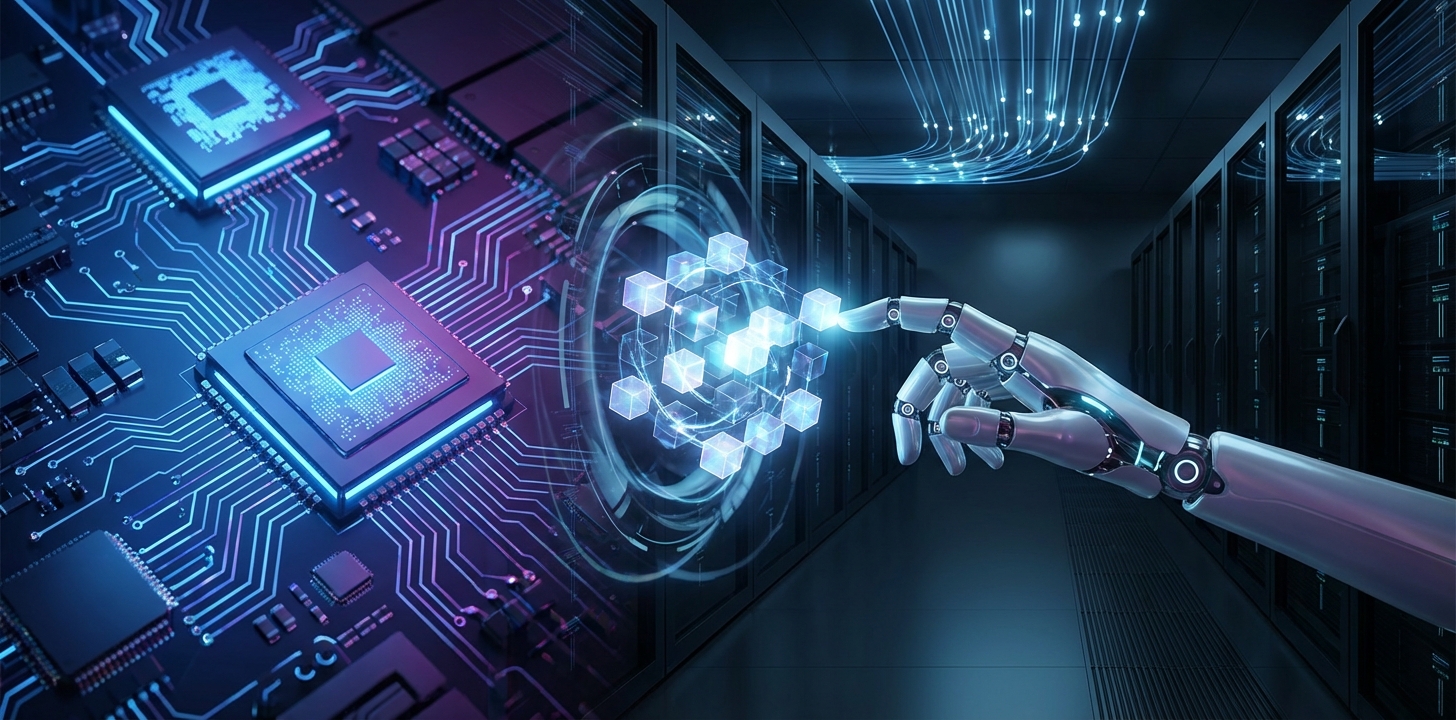
Imagine you’ve spent years building the most brilliant brain in history. It can write poetry, solve complex physics equations, and code entire apps in seconds. But there’s a catch: this brain lives in a jar. It can’t move, it can’t touch anything, and it depends entirely on a massive, power-hungry life-support system just to stay "awake."
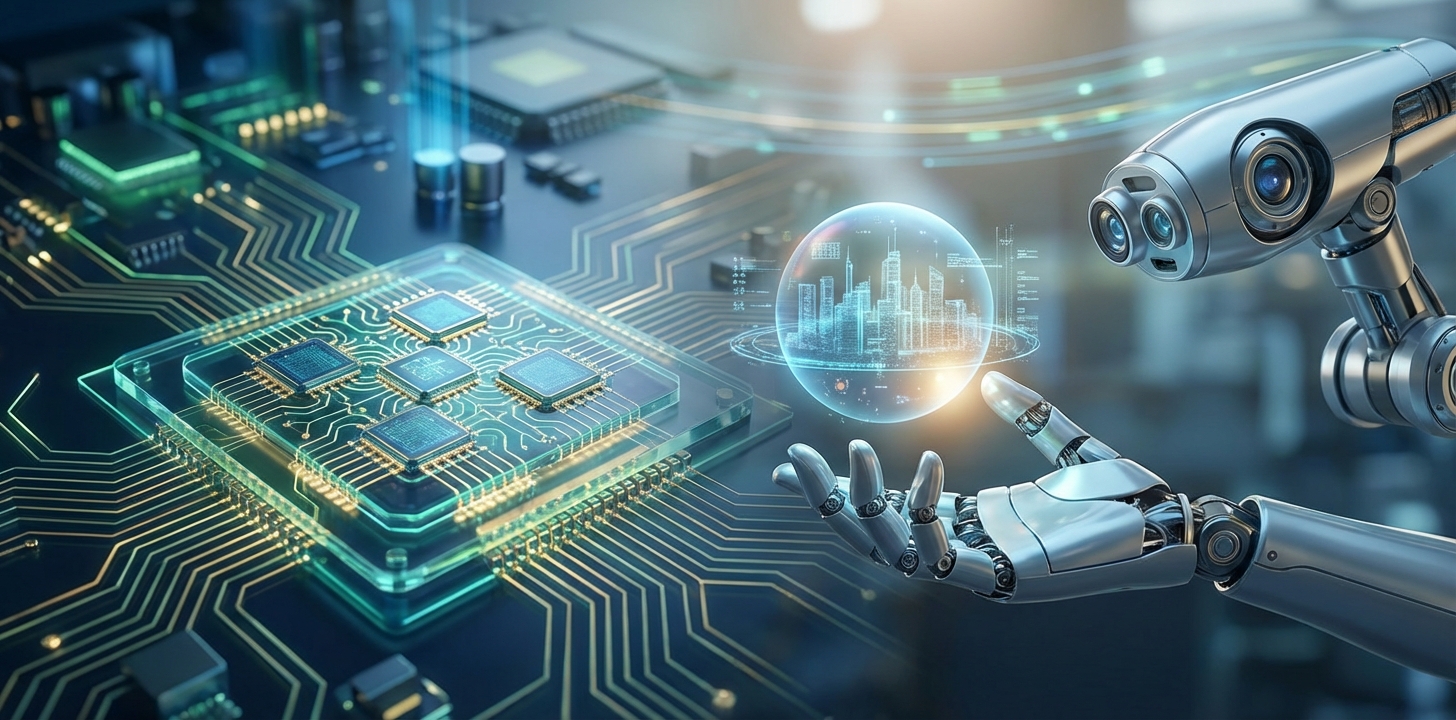
That was the state of Artificial Intelligence until very recently. But as we move through 2026, the "brain in the jar" is finally getting a body. We are witnessing a massive shift where AI is moving from digital chatboxes into the physical world. This isn't just about smarter software; it’s about the massive hardware, the specialized chips, and the humanoid robots that are turning AI into a tangible, physical force. 🤖
Wait, what? If you thought AI was just about ChatGPT, think again. The real battle of 2026 is being fought in the trenches of data centers and factory floors. The world is realizing that to have "God-like" AI, you need a hell of a lot of electricity and some very expensive pieces of silicon.
Why This Matters
In plain English, the "magic" of AI requires a massive physical footprint. Think of it like this: if AI is the driver, the hardware is the car and the data center is the highway. Without a fast car and a sturdy road, the driver isn't going anywhere. 🏎️
For the average person, this matters because the devices we use are about to get a whole lot smarter at the "edge"—meaning your phone or your home robot won't just send data to a cloud; it will think for itself in real-time. For businesses, this is a race for efficiency. If your competitor uses AI-driven robotics and you don’t, they will outproduce you at a fraction of the cost.
Furthermore, this hardware gold rush is reshaping global economics. Countries that were once overlooked are now becoming "AI Powerhouses" simply because they have the land, the power, and the strategic location to host the brains of the future. The digital divide is no longer just about who has the internet; it’s about who has the compute.
The Big Story
The headline story of 2026 is the "Physicalization of Intelligence." We are moving away from compute-intensive workloads that live exclusively in the cloud to real-time, "agentic" AI that operates in our physical space. This transition is placing unprecedented pressure on our global infrastructure. AI workloads are now so data-hungry and real-time that traditional cloud platforms are buckling under the weight [1].
To solve this, we are seeing a massive boom in specialized AI data centers. These aren't your grandfather’s server rooms. A single modern AI data center can consume as much electricity as 100,000 households [17]. This hunger for power is so intense that tech giants are now unironically looking at nuclear energy to keep the lights on. ⚛️
But what’s happening inside those centers? We are seeing the arrival of next-generation NVIDIA chips that make the H100s of last year look like calculators. These chips are designed specifically for "Agentic AI"—AI that doesn't just answer questions but takes actions.
| Feature | 2024 AI (Generative) | 2026 AI (Agentic/Physical) |
|---|---|---|
| Primary Goal | Content Creation | Task Execution |
| Hardware | Cloud-based GPUs | Edge Chips & Humanoid Robotics |
| Power Needs | High | Extreme (Nuclear-scale) |
| Response Time | Seconds (Latency) | Milliseconds (Real-time) |
| Physical Form | Screen/Text | Robots/IoT/Automated Systems |
| "The structure of the new AI world is being designed and built today," notes a recent analysis on the global AI dilemma [11]. We are no longer just talking about code; we are talking about the "Business of Intelligent Transformation," where the winners are those who can translate AI into physical productivity [20]. | ||
| US Watch | ||
| In the United States, the focus has shifted from "How do we build a better LLM?" to "How do we secure the supply chain?" The US is doubling down on domestic chip manufacturing and quantum computing. The goal is to ensure that the hardware powering the next generation of AI isn't subject to geopolitical whims. | ||
| Quantum computing is finally moving out of the "experimental" phase and into "practical trial" territory. Major US tech hubs are discussing how quantum can optimize the massive energy grids required for AI data centers [4]. If quantum can solve the cooling and energy problems of AI, the US maintains its lead. 🇺🇸 | ||
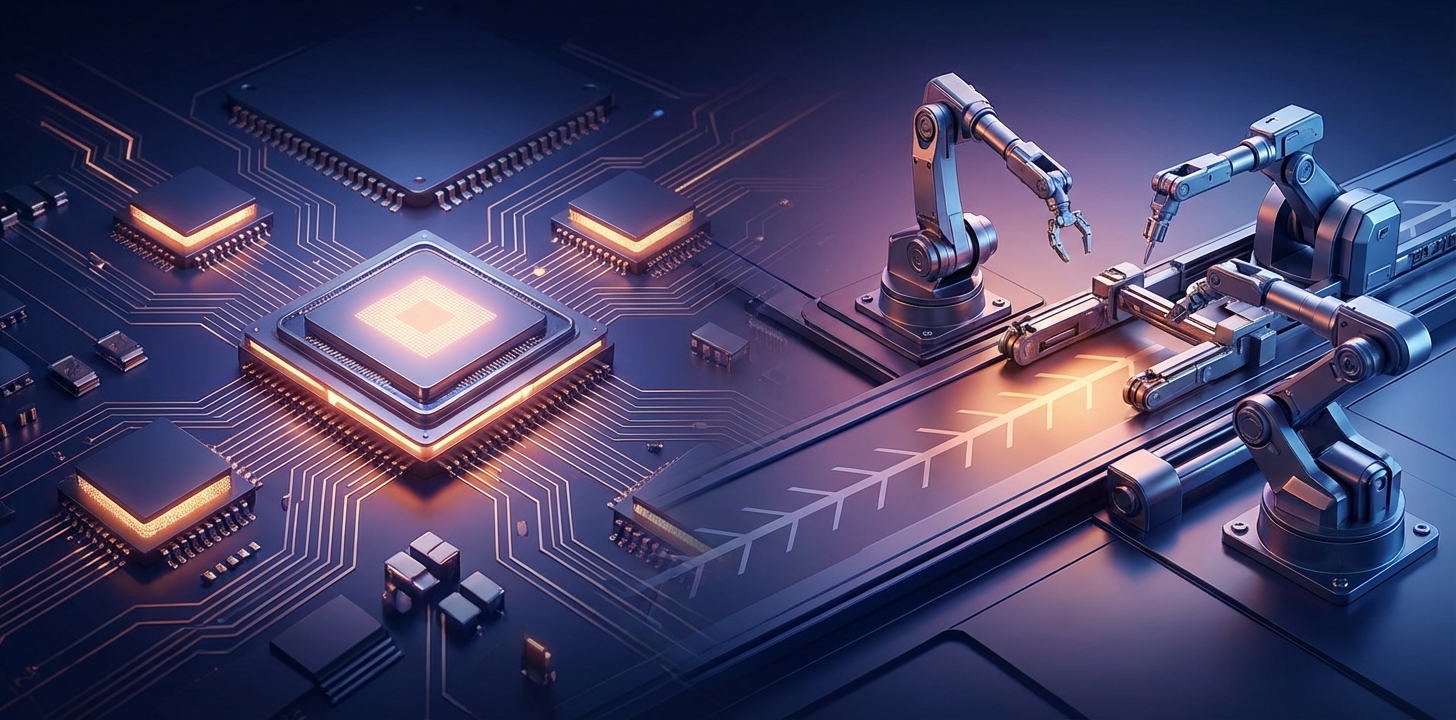
| Meanwhile, American companies like NVIDIA and Tesla are racing to perfect the "Optimus" style humanoid robots. The vision for 2026 is a robot in every factory. We aren't quite there yet for every home, but for logistics and manufacturing, the US is betting big that silicon "muscles" will replace manual labor. | ||
| China Watch | ||
| While the US focuses on high-end chip design, China is winning the "Scale and Robotics" game. China’s 2026 strategy involves the mass production of humanoid robots at a price point that makes them accessible to small and medium enterprises. 🇨🇳 | ||
| China is also making massive strides in "Green AI." Because AI is such a power hog, Chinese researchers are leading the way in creating models that require less compute to achieve the same results. They are essentially trying to build a "leaner" brain while the US builds a "bigger" one. | ||
| There is also a significant push in China for "Web 3.0" and "IoT" integration with AI [8]. Imagine a factory where every machine is a node on a blockchain, governed by an AI that optimizes production based on real-time global demand. That’s the level of automation China is aiming for in 2026. | ||
| Global Signal | ||
| The biggest global trend is that Southeast Asia (SEA) has become the new frontline for AI investment. Billions are pouring into the region as companies look for alternatives to the US-China duopoly [16]. 🌏 | ||
| Microsoft, for instance, has committed over US$1 billion to Thailand's cloud and AI infrastructure starting in 2026 [12]. This is part of a broader trend where talent and capital are powering ASEAN’s AI ambitions, influencing how businesses scale across the Global South [13]. | ||
| However, there is a catch. Higher energy and raw material prices are driving up the cost of building this infrastructure [14]. This has led countries like Indonesia and Vietnam to rethink their energy policies, with some even revisiting nuclear power to sustain their data center booms [17]. | ||
| Malaysia Watch | ||
| Malaysia is having a massive "breakout" moment in 2026. The government has officially launched the National AI Action Plan 2026–2030, which sets a bold vision for fintech adoption and digital governance [3]. 🇲🇾 | ||
| Here’s why Malaysia is the "one to watch" in 2026: |
- Budget 2026: The government has allocated a staggering RM50 billion to fuel SME growth, specifically focusing on AI adoption and digital transformation [7].
- The AI Office (NAIO): The National AI Office is now fully operational, providing a strategic roadmap to enhance investor confidence and setting up a regulatory framework for AI adoption [5].
- New Legal Framework: By June 2026, Malaysia is expected to present its first statutory framework governing AI to the cabinet, ensuring that innovation doesn't come at the cost of ethics [6].
- Data Center Hub: With over 500 operational data centers, Malaysia is becoming the "engine room" of Southeast Asia’s digital economy [17].
Wait, what? 500 data centers? That’s a lot of blinking lights. But experts warn that for this growth to be sustainable, Malaysians must take a more active role in the transformation rather than just being passive consumers [9]. It's not just about building the buildings; it's about training the people to run the AI within them.Did you know?
A standard AI query uses about 10 times more electricity than a Google search. This is why Malaysia’s focus on sustainable energy for data centers is the secret sauce for its 2026 success! ⚡
What to Do Next
- **Audit Your
Found this article helpful? Share it with others!
Quick AI FAQ
How does this AI development affect Malaysian businesses?
Local businesses can leverage these AI breakthroughs to automate repetitive tasks, improve customer engagement via smart chatbots, and scale content production with 80% lower costs.
Is it safe to integrate AI into existing workflows?
Yes, when implemented with professional oversight. We focus on secure, privacy-compliant AI integrations that align with Malaysia's PDPA regulations.
Where can I get help with AI implementation in Penang?
JOeve Smart Solutions provides on-site and remote AI consultation for SMEs in Penang and across Malaysia, specializing in web apps, chatbots, and video automation.