2026 AI Roadmap: Why China is Winning the Humanoid Robot War
2026 AI Roadmap: Why China is Winning the Humanoid Robot War
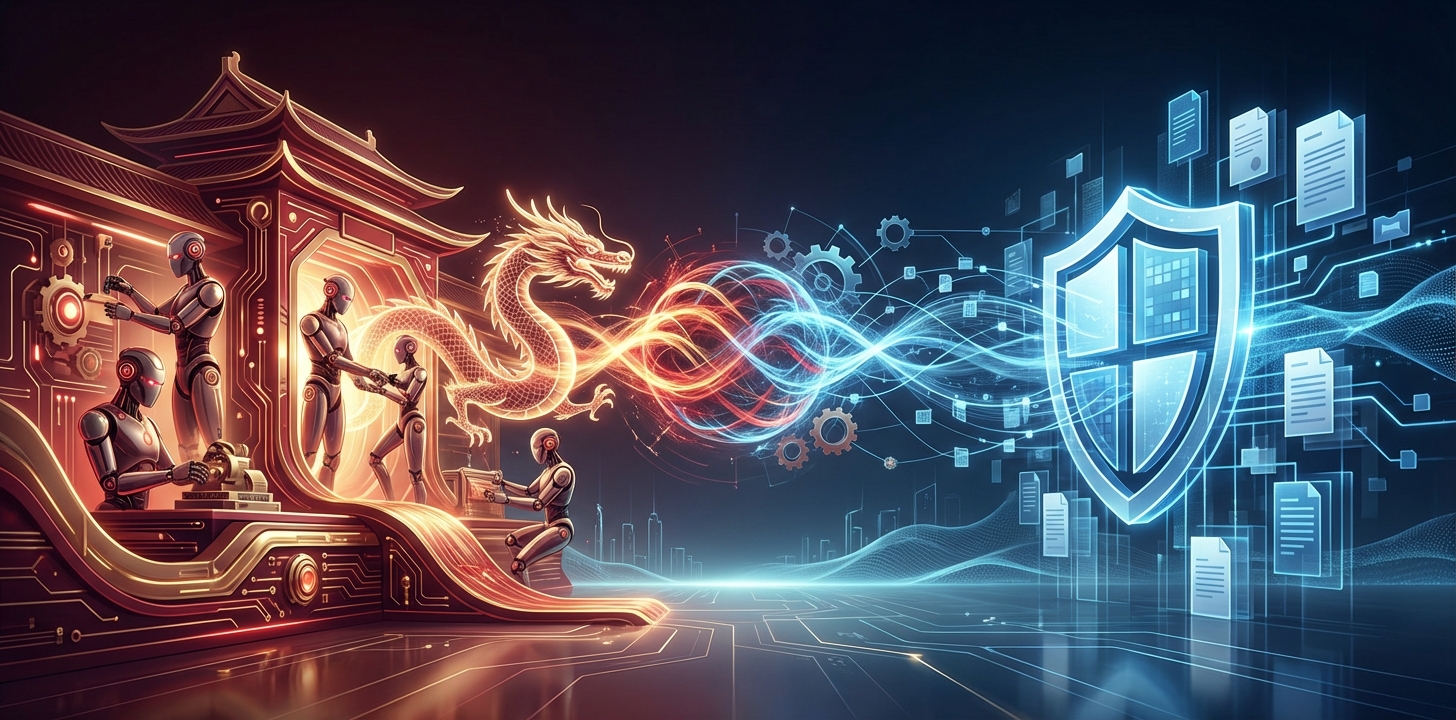
Imagine walking into a factory where the lights are dimmed, the air conditioning is turned off, and the only sound is the rhythmic whirring of servos. There are no humans on the floor. Instead, rows of sleek, bipedal humanoid robots are assembling other robots. This isn't a scene from a sci-fi movie; it’s the reality of the 2026 "Dark Factories" currently scaling across Shenzhen and Hangzhou. While we’ve spent the last few years arguing with chatbots about poetry, the world has quietly shifted toward the "Physical AI" era. 🤖
The race for artificial intelligence has entered its most aggressive phase yet. In the West, OpenAI is reportedly preparing to double its workforce by the end of 2026 to stay ahead of rivals like Anthropic and Google [1]. But while Silicon Valley is hiring more engineers to refine code, China is focused on giving that code a body. The "Great Wall of Intelligence" is no longer just a digital barrier; it’s becoming a physical workforce that could redefine global manufacturing forever.
Why This Matters
Why should you care if a robot in China can fold laundry or weld a car door? Because we are witnessing the "Inflection Point of Inference" [9]. This is a fancy way of saying that AI is moving out of the "training" phase—where it learns from the internet—and into the "execution" phase—where it does real work in the real world. 🌍
If China wins the race to mass-produce humanoid robots, they won't just export gadgets; they will export labor. Think of it like this: in the 1990s, we outsourced software to code; in the 2000s, we outsourced manufacturing to factories; in 2026, we are beginning to outsource existence to autonomous agents.
For the average person, this means the cost of goods could plummet, but it also means the definition of a "job" is about to get a massive makeover. We are moving from a world where AI helps you write an email to a world where AI builds your house. The stakes couldn't be higher for the global economy.
The Big Story
The headline news making waves in Silicon Valley is OpenAI’s massive expansion. By doubling its workforce, the creator of ChatGPT is signaling that the "scaling laws" still hold true—more talent plus more compute equals smarter models [1]. However, there is a contrarian take emerging: Is this a sign of strength or a desperate attempt to keep up with the efficiency of Chinese competitors like DeepSeek?
DeepSeek has recently shocked the industry by producing models that rival GPT-4 at a fraction of the training cost. This "efficiency gap" is the new front line. While US companies are throwing billions at massive server farms, Chinese giants like ByteDance (the parent of TikTok) and Alibaba are perfecting "Small Language Models" (SLMs) that can run on cheaper hardware. 📉
Wait, what? You heard that right. The future might not be one giant "God-like" AI in the cloud, but millions of tiny, specialized AIs living in your phone, your car, and your kitchen appliances.
| Feature | US AI Strategy (OpenAI/Google) | China AI Strategy (DeepSeek/Alibaba) |
|---|---|---|
| Primary Goal | Artificial General Intelligence (AGI) | Industrial & Physical Autonomy |
| Workforce | Rapidly Doubling Talent [1] | Integration with Manufacturing |
| Energy Focus | Nuclear Power Partnerships [8] | Grid Efficiency & Battery Tech |
| Key Advantage | Top-tier Research & Innovation | Mass Production & Data Verticality |
| Nvidia CEO Jensen Huang recently noted that we are at a turning point where AI is no longer just a tool but a fundamental shift in how the world operates [4]. He’s betting big on "inference"—the act of the AI actually thinking and responding—which is why Nvidia’s partnership with Microsoft to use AI to speed up nuclear power plant construction is so critical [8]. We are building AI to help us build the power plants that power the AI. Talk about a feedback loop! ⚡ | ||
| US Watch | ||
| In the United States, the federal government is finally stepping in to stop a "patchwork" of AI laws. The White House recently unveiled a policy framework aimed at blocking state-level regulations, like a recent Colorado law that attempted to ban "algorithmic discrimination" [11]. The administration's logic? If every state has different AI rules, the US will lose the race to China. | ||
| This is a controversial move. On one hand, it allows companies like Microsoft and Google to innovate faster without worrying about 50 different sets of rules. On the other hand, critics argue it strips away local protections for privacy and civil rights. ⚖️ | ||
| Meanwhile, Silicon Valley's startup scene is pivoting. We’re seeing a massive influx of funding for startups that focus on "AI for Defense" and "AI for Energy." Even though Google has stated it will keep working with Anthropic on non-defense projects [2], the line between "civilian AI" and "military AI" is becoming increasingly blurry. | ||
| China Watch | ||
| While the US debates policy, China is building hardware. Baidu, Tencent, and Alibaba have moved beyond just being "the Google/Facebook of China." They are now the "Foundries of Intelligence." Baidu’s Ernie Bot has evolved into a full-scale operating system for humanoid robots. | ||
| The most shocking development is the speed of China’s humanoid robot rollout. Companies like Unitree and Fourier Intelligence are producing bipedal robots that can navigate complex terrains and perform delicate tasks like sorting electronic components. 🦾 |
"The goal isn't to make a robot that looks like a human; it's to make a robot that works like a human but costs less than a car," says one Beijing-based researcher.
Did you know? China’s Ministry of Industry and Information Technology aims to mass-produce humanoid robots by 2027, treating them as a "disruptive technology" on par with smartphones and green energy vehicles.
The "DeepSeek" effect is also real. By proving that you don't need trillion-dollar clusters to build world-class AI, Chinese firms are democratizing high-end intelligence. This allows smaller Chinese factories to implement AI-driven automation that was previously only available to tech giants.
Global Signal
What does this mean for the rest of the world? We are seeing a "Digital Iron Curtain." On one side, you have the US-led ecosystem powered by Nvidia chips and Microsoft software. On the other, you have a Chinese-led ecosystem powered by domestic silicon and high-efficiency models.
The "Inflection Point of Inference" means that AI is becoming a commodity [9]. When intelligence becomes cheap and abundant, the value shifts to energy and raw materials. This is why we see tech companies suddenly becoming nuclear energy investors [8]. If you want to own the future, you have to own the plug.
Malaysia Watch
For Malaysia, this US-China rivalry presents a unique "Goldilocks" opportunity. As both superpowers look to diversify
Found this article helpful? Share it with others!
Quick AI FAQ
How does this AI development affect Malaysian businesses?
Local businesses can leverage these AI breakthroughs to automate repetitive tasks, improve customer engagement via smart chatbots, and scale content production with 80% lower costs.
Is it safe to integrate AI into existing workflows?
Yes, when implemented with professional oversight. We focus on secure, privacy-compliant AI integrations that align with Malaysia's PDPA regulations.
Where can I get help with AI implementation in Penang?
JOeve Smart Solutions provides on-site and remote AI consultation for SMEs in Penang and across Malaysia, specializing in web apps, chatbots, and video automation.