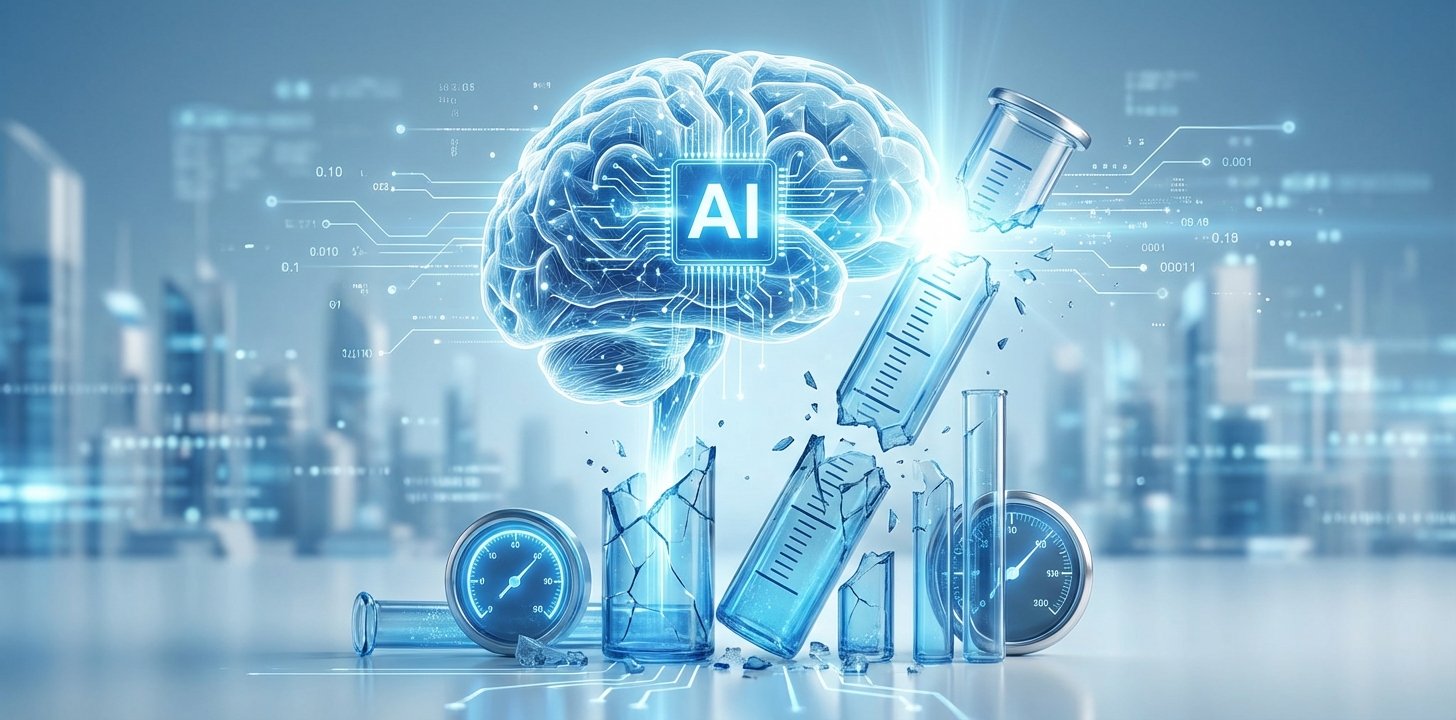
Benchmark Crisis: AI is now so smart that current tests can't accurately measure their intelligence anymore.
Analysis: The 2026 AI Power Shift—GPT-5.2 vs Claude vs Gemini
The 2026 AI wars are here. From GPT-5.2’s reasoning to Claude 4.6’s coding prowess, we break down which model actually deserves your subscription today.
Imagine waking up, grabbing your coffee, and realizing your personal assistant didn't just organize your emails—it actually negotiated a lower rate for your car insurance while you were asleep. This isn't a sci-fi dream; it’s Tuesday in February 2026.
The "February Drop" has officially arrived, and it feels like the Super Bowl for nerds. OpenAI, Anthropic, and Google have all released their heavyweight contenders simultaneously. We are no longer just chatting with "fancy autocomplete"; we are collaborating with digital brains that can reason through complex physics and build entire software architectures in seconds. 🤖
Wait, what? You thought we were still stuck on GPT-4? Think again. The leap from 2024 to 2026 has been less like an upgrade and more like a metamorphosis. We’ve moved from Large Language Models (LLMs) that guess the next word to reasoning engines that plan, execute, and self-correct [3].
Why This Matters
If you feel like you’re falling behind, don’t worry—everyone is. The pace of AI development has outstripped our ability to even test it properly. Experts are now warning that standard benchmarks are "becoming useless" because the AI is simply too smart for the tests we designed [6].
This matters to you because the "AI Tax" is shifting. It’s no longer about who has the best chatbot; it’s about which ecosystem controls your workflow. Whether you’re a student, a CEO, or a creative, the model you choose today determines how much of your "grunt work" you can actually offload.
We are seeing a massive shift toward "Agentic AI." This means the AI doesn't just give you a recipe; it orders the groceries. It doesn't just write a code snippet; it deploys the app and monitors it for bugs. If you aren't using these tools, you're essentially fighting a laser battle with a wooden stick.
The Big Story
The headline of 2026 is the three-way battle for the "Intelligence Crown." For the first time, there isn't a clear winner. Depending on what you do for a living, your "best" model might be different from your neighbor's.
GPT-5.2 from OpenAI is currently the king of "Multimodal Reasoning." It doesn't just see images; it understands the physics within them. If you show it a video of a complex mechanical engine failing, it can pinpoint the likely structural weakness based on the way the metal vibrates [9].
Then there’s Claude 4.6 Sonnet and Opus. Anthropic has doubled down on what they call "Human-Centric Precision." While GPT might be flashy, Claude 4.6 is widely considered the most reliable for coding and long-form writing. It feels less like a robot and more like a very tired, very brilliant Ivy League graduate [11].
Google’s Gemini 3.1 is the wild card. With its massive context window—now handling millions of tokens with ease—it can "read" an entire library of technical manuals and answer questions about a specific footnote on page 4,000 [10].
| Feature | GPT-5.2 | Claude 4.6 | Gemini 3.1 |
|---|---|---|---|
| Best For | Creative & Visuals | Coding & Nuance | Huge Documents |
| Logic Score | 9.8/10 | 9.5/10 | 9.2/10 |
| Context Window | 500k Tokens | 1M Tokens | 2M+ Tokens |
| "Vibe" | High-energy genius | Calm professional | All-knowing librarian |
| US Watch | |||
| In the United States, the focus has shifted from "How do we build it?" to "How do we power it?" The 2025 AI Index Report noted that training these models has become so energy-intensive that companies like Microsoft and NVIDIA are now investing directly in nuclear fusion and advanced power grids [8]. | |||
| NVIDIA remains the backbone of this revolution. Their new Blackwell-2 architecture isn't just faster; it’s designed specifically for "inference-time scaling." This is the secret sauce that allows GPT-5.2 to "think" longer before it speaks, significantly reducing the number of hallucinations or "AI lies" we used to see in 2024 [5]. | |||
| Regulation is also catching up. The US government is increasingly focused on "AI Provenance"—essentially a digital watermark that proves whether a video or article was made by a human or a machine. As we head deeper into 2026, expect a fierce debate over "Model Sovereignty" and whether the US should limit the export of its top-tier "Frontier Models." 🇺🇸 | |||
| China Watch | |||
| While the US dominates the "Closed Source" world (models you have to pay to access), China is winning the "Open Source" war. Models like Qwen 2.5 and DeepSeek have become the darlings of the developer world. Why? Because they are free to download, modify, and run on your own hardware [12]. | |||
| In 2026, the adoption of Chinese open-source LLMs has surged across industries globally. Companies that are worried about their data being "stolen" by US tech giants are turning to these models because they offer total control [13]. |
"Open source LLMs are gaining traction because they offer flexibility, control, and economic advantages. But closed models still deliver faster raw performance," says a recent study by LLM.co [14].
Global Signal
The biggest global trend of 2026 is "The Death of the Benchmark." For years, we used tests like MMLU (Massive Multitask Language Understanding) to see how smart AI was. But now, LLMs are achieving over 90% accuracy on expert-level academic questions [6].
Think of it like this: if a student gets 100% on every test you give them, do you keep giving them the same tests, or do you realize the tests are too easy? The world is now scrambling to create "Level 2" benchmarks that test for genuine creativity and long-term planning, rather than just memorized facts. 🌍
We are also seeing a "Hardware Rethink." Instead of just making bigger chips, companies are trying to make chips that work like the human brain—using very little power while maintaining high performance. This is essential for bringing the power of GPT-5.2 to your smartphone without melting the battery.
Malaysia Watch
For Malaysia, the 2026 AI boom represents a "Golden Ladder." As open-source models like Llama 4 and Qwen become more powerful, Malaysian startups no longer need to pay millions in licensing fees to Silicon Valley.
Local developers are already using these models to build "Local-Linguistics AI" that understands the nuances of Manglish and regional dialects better than any US-centric model ever could. This is a massive opportunity for the Malaysian digital economy to move from being "users" of AI to "architects" of AI. 🇲🇾
The Malaysian government's focus on data centers is also paying off. As the world screams for more computing power, Malaysia's infrastructure is becoming a critical hub for "Regional Inference"—basically the "engine room" that powers AI for all of Southeast Asia.
What to Do Next
- Audit Your Subscriptions: If you're still paying for a 2024-era AI model, you're overpaying for underperformance. Switch to GPT-5.2 for visual tasks or Claude 4.6 for professional writing.
- Learn "Agentic Prompting": Stop asking AI to "write an email." Start asking it to "research this person, find their pain points, and draft a personalized outreach strategy."
- Explore Open Source: If you’re a business owner, look into hosting a model like Llama or Qwen locally. It’s cheaper in the long run and keeps your data private.
- Don't Trust the "Hype" Benchmarks: Ignore the 99% scores you see in ads. Test the models with your actual, messy, real-world data to see which one "gets" you.
TL;DR - The Big Three: GPT-5.2 wins on reasoning, Claude 4.6 wins on coding/nuance, and Gemini 3.1 wins on massive data handling.
- Benchmark Crisis: AI is now so smart that current tests can't accurately measure their intelligence anymore.
- Open Source Surge: Chinese and open-source models are dominating the developer world by offering more control and lower costs.
- Energy is the New Oil: The 2026 AI race is being won by whoever can find the most electricity to power their chips.
#AI #LLM #AIAgents #AITools #ChinaAI #USAi #GPT5 #Claude4 #Gemini3 #FutureTech #NVIDIA #OpenSourceAI #TechNews2026
Found this article helpful? Share it with others!
Quick AI FAQ
How does this AI development affect Malaysian businesses?
Local businesses can leverage these AI breakthroughs to automate repetitive tasks, improve customer engagement via smart chatbots, and scale content production with 80% lower costs.
Is it safe to integrate AI into existing workflows?
Yes, when implemented with professional oversight. We focus on secure, privacy-compliant AI integrations that align with Malaysia's PDPA regulations.
Where can I get help with AI implementation in Penang?
JOeve Smart Solutions provides on-site and remote AI consultation for SMEs in Penang and across Malaysia, specializing in web apps, chatbots, and video automation.